New research has revealed there are at least 25,000 modal filters in the UK restricting motor vehicles and enabling access to cyclists and pedestrians.
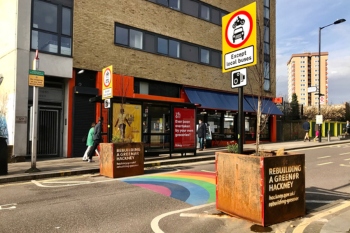
Modal filters, which are commonly used as part of low traffic neighbourhoods (LTNs), usually come in the form of bollards, kerbs, planters or gates.
Using OpenStreetMap data, the campaign group #BikeisBest has found that there are 25,676 modal filters which prevent through motor traffic in England, Wales, Scotland and Northern Ireland.
Greater London leads the way in LTN filtering, with 3,689 historic modal filters discovered by analysts. Greater Manchester has 1,564, West Yorkshire has 1,040 and the West Midlands has 818.
Adam Tranter, founder of #BikeIsBest, commented: ‘The fact that there are at least 25,000 modal filters in the UK shows that, while change is hard, these schemes tend to bed in and become part of everyday life for residents.
‘There’s been a lot in the news about LTNs but the reality is that these are not new concepts. They are a natural response by councils to the changing traffic patterns as cities grow and have become a standard feature in the design of new towns since the 1960s.’
According to Transport for London (TfL), around 106 new LTNs have been installed in London since the start of the pandemic. TfL provides councils with funding secured from the Department for Transport.
‘There are some campaigners fighting to remove these filters which will make residential roads more hostile to benefit drivers who wish to cut through,’ continued Mr Tranter.
‘While there has been much debate over the 100 new LTNs in London installed since the start of the pandemic, I’d hazard a guess that there’d be much more disquiet if you went into neighbourhoods with these historical road filters and said you were going to re-open their roads to rat-running traffic.
‘Change is hard for people but the case studies of these historical filters shows that the common fears are rarely realised in the long-term.’
Photo: Will Durrant / Shutterstock.com