Local government leaders in Scotland have described Government council tax reforms as ‘bizarre’ and warned they will merely add more red tape.
The Scottish Government said changes to the top four bands would generate an extra £100m a year to invest in schools. It plans to continue the freeze on council tax until 2017 after which councils will be able to introduce increases of up to 3%.
First minister Nicola Sturgeon said the reforms would make councils ‘more accountable for raising revenue, while ensuring that the rapid and significant rises we saw in the past do not return’.
But council leaders have responded with a mixture of disbelief and anger at the plans.
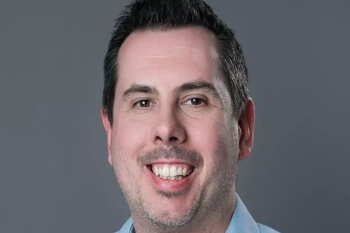
Kevin Keenan, finance spokesperson for the Convention of Scottish Local Authorities (COSLA), said: ‘For a Government that has criticised the council tax system since coming into power in 2007 and then went to the trouble of setting up a commission to look at an alternative it is bizarre that this is the best that they could come up with.
‘Putting self-interest ahead of real change could have serious consequences for the lives of Scottish people particularly coming on the back of such a terrible settlement for local government.
‘What today boils down to is that they have done nothing of substance, they have taken a system made it more complicated and less transparent for individuals and more complex for councils to administer. They have muddied the waters.’
COSLA president, Cllr David O’Neill, described the reforms as ‘an offence against local democracy’.
‘The proposed cap on council tax, which seems nothing more than a direct lift from England, and the central direction of revenue raised is another act of folly from Government. This is not an attack on education spend – but it should be councils that make that decision not the Scottish Government.’
He said the Scottish Government had ‘completely ignored’ the recommendations of the Commission on Local Tax Reform.
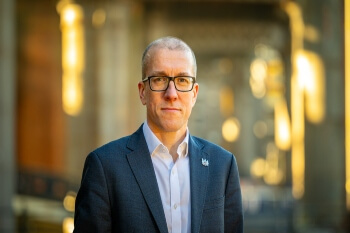
Don Peebles, head of the Chartered Institute of Public Finance and Accountancy (CIPFA), said the reforms would create a fairer, more progressive system.
But he added: ‘When the council tax freeze comes to an end in 2017 there will be a 3% cap on council tax rises. But this restricts local decision making and we want to see greater flexibility for councils.
‘The absence of a commitment to revaluation is no surprise since the Commission on Local Tax Reform recognised it was politically challenging. The last revaluation was in 1991, ducking the issue yet again is just storing up problems for the future.’