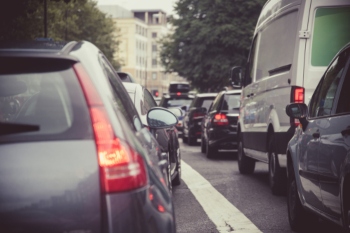
Congested roads are more than just a nuisance for drivers. As well as wasting valuable time, heavy traffic leads to greater fuel usage, long-term engine damage, and an increase in global CO2 emissions as well as more air pollution at the local level – transport remains the UK’s largest emitting sector for greenhouse gases, representing 27% of the UK’s annual carbon emission. In addition, without proper traffic management, problems at one junction can quickly back up and lead to major gridlock across the whole network.
Faced with increasing numbers of vehicles on their roads and the pressures of meeting stringent air quality regulations, the local authorities we talk too are working hard to keeping their roads running smoothly and efficiently. All too often, however, they find themselves relying on technology that is cumbersome, inflexible or just plain out of date. Everyone knows that public transport is a key player in the road to net zero—but how?
Challenges to overcome
The pandemic has caused a reduction in public transport usage. Many people have given up on using public transport daily in favour of using their own car because of accessibility, convenience, and cost – the UK has some of the most expensive train fares in Europe. Evidence suggests that last year 50% of the railway car parks are empty on a Monday morning, it used to be difficult to find a spot. People then justify their choice to use their own cars by telling themselves that cars are safer.
The downward trend in public transport use has been ongoing for many years. In fact, the 2008 recession was the only time in about 10 years that bus usage increased. However, all public transport is not made equal. Cities are often very well-funded and therefore their public transport is very good, but smaller areas don’t receive as much government funding and local authorities struggle to fund their transport, causing the services that they offer to deteriorate over the years, fewer people to use them, and then ultimately to go on a death spiral. This happens especially in rural communities, where authorities don’t see a worth in regular bus lines that very few people will use.
Open data is the way forward
How do you make a bus service more appealing? It needs to be not only affordable (and the £2 price cap many bus companies are currently operating is a great start), but also reliable. Bus open data delivers real time information on where buses are, what the fare schedules are, and if they are running on time, all of which can provide very useful insights. For example, it allows local authorities to provide buses with priority at traffic lights when the service is running late, or to stall them when the service is running early. By monitoring the services daily, local authorities can identify which parts of the network cause issues for buses and can fix them before they become a bigger problem. By making the transport network more reliable and efficient, the hope is that fewer people will use their cars and the roads will be less congested. In addition, the faster authorities can respond to an incident, the sooner they can restore their road space to normal operation.
All of these factors contribute to optimising the run times of public transport, inviting more people to use it instead of their own vehicles. And when people do choose to use their own vehicles, any traffic management software’s calculations result in less congestion, and therefore in reduced traffic and pollution. All of these are important factors to achieve net zero.
What will happen in the future?
Climate resilience will be the next big challenge for our roads. We’ll see more frequent and significant severe weather events that will test and age our infrastructure. Being able to have solid evidence with which to monitor the roads followed by the trust to make informed decisions on where to make investments will become even more critical. What local authorities can do to prepare is to increase investments and procure big projects that use open data and solutions that can enable them to start now, start small, and get going with the fight for climate resilience.
When the climate reaches record high temperatures, our roads will break. There will be flooding for example. The wear and tear of the built environment will not be sustainable, unless we redefine how we design in the future. The roads aren’t built of infinite resources, so how will we build when we run out? Preparing and having climate resilience in the immediate future now is about sustainability and affordability.
Data is easy to share. Working collaboratively, we can make a real difference.
Subu Kamal is head of Product Management for TRL Software.
Sign up here to receive our free daily news and jobs bulletin.