Ellie Ames 03 November 2023

MPs criticise ‘disappointingly slow’ progress on active travel

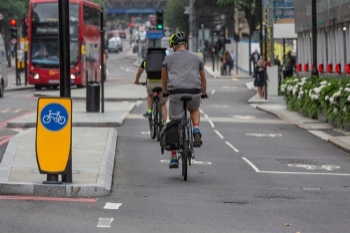
MPs criticise ‘disappointingly slow’ progress on active travel image
Image: Canetti / Shutterstock.com

The Government is not on track to meet its active travel targets, with funding uncertainty hampering councils’ efforts, the Public Accounts Committee (PAC) has said.

MPs have followed up a National Audit Office report published in June, which found that the Department for Transport’s (DfT) decision to cut active travel funding by £233m up to April 2025 meant it was unlikely to ‘get close’ to achieving objectives set for 2025.

The PAC has described ‘disappointingly slow progress’ on the objectives, which include doubling cycling rates and increasing the proportion of children walking to school by six percentage points.

There has been ‘no sustained increase’ in cycling and fewer children now walk to school than when targets were set.

The PAC warned that the impact and quality of £2.3bn spent on active travel infrastructure between 2016 and 2021 remained ‘unclear’ because the cost of most projects was below the threshold at which local authorities are required to evaluate them.

It called on the DfT to lay out its plans to evaluate active travel interventions by December.

The PAC’s inquiry heard that councils’ efforts to deliver successful interventions were hindered by ‘considerable uncertainty’ in available funding, which it found was available through multiple routes, often short-term, and provided at late notice.

Local Government Association transport spokesperson Darren Rodwell said: ‘Councils share the Government’s ambition to increase cycling and walking rates and echo the committee’s call for councils to have greater certainty around funding to reduce carbon and other harmful emissions from transport.’

A DfT spokesperson said: ‘We absolutely understand the importance of active travel, which is why we’ve invested a record £3bn to deliver better walking, wheeling and cycling schemes to people and places across the UK.’


Skills Pipelines: What local government needs to know image

Skills Pipelines: What local government needs to know

Councils and mayors are to be handed a central role in developing skills pipelines for local industries, as the Government unveils what it calls a ‘fundamental change’ to the education system aimed at tackling youth unemployment. Here's what council leaders and officers need to know.
SIGN UP
For your free daily news bulletin
Highways jobs

Senior Business Analyst

North Yorkshire Council
£47,181- £51,356 per annum
Do you enjoy analysing problems, identifying opportunities, and delivering practical solutions? Scarborough, North Yorkshire
Recuriter: North Yorkshire Council

Senior Business Analyst

North Yorkshire Council
£47,181- £51,356 per annum
Do you enjoy analysing problems, identifying opportunities, and delivering practical solutions? Northallerton, North Yorkshire
Recuriter: North Yorkshire Council

Senior Business Analyst

North Yorkshire Council
£47,181- £51,356 per annum
Do you enjoy analysing problems, identifying opportunities, and delivering practical solutions? Harrogate, North Yorkshire
Recuriter: North Yorkshire Council

Occupational Therapist (Grenfell Education Hub) (Term Time)

The Royal Borough of Kensington & Chelsea Council
£44937 - £533197 per annum
Support the North Kensington community to rebuild, aspire and shape futures beyond tragedy. This is a unique role in a community led multi-disciplinar England, London
Recuriter: The Royal Borough of Kensington & Chelsea Council

Business Manager – Knowsley Safeguarding Children Partnership (KSCP)

Knowsley Metropolitan Borough Council
£54,703 - £60,044
Knowsley Council is an award-winning Local Authority, named Local Authority of the Year in the Municipal Journal Awards 2024. Knowsley (Metropolitan borough), Merseyside
Recuriter: Knowsley Metropolitan Borough Council
Linkedin Banner