Deja Sutherland, head of Enablement, Cloudhouse, looks at how to achieve compliance with Awaab’s Law without rebuilding IT applications.
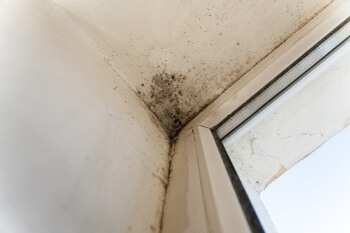
Awaab’s Law, which came into force last year, was introduced following the tragic death of two-year-old Awaab Ishak, who died after prolonged mould exposure in his home. It highlights the need for safer conditions for all. The law ensures housing associations must evidence they are tackling damp, mould and other hazards quickly and effectively.
One element that’s currently slowing down housing associations from maintaining accurate records is the fact that so many run core asset management systems on outdated, unsupported IT infrastructure. This affects their ability to respond rapidly to regulators and prove compliance. So, while operational teams focus on inspections and remedial works, those that manage the IT of these associations must consider the obstacles that these outdated systems put in place.
The assumption is often that meeting new legal obligations requires expensive and disruptive redevelopment of these applications. In reality, there’s a better option. By modernising existing systems so they operate securely on updated infrastructure, housing associations can achieve compliance and avoid operational downtime – all without rewriting software or retraining staff.
Awaab’s Law – an urgent imperative to strengthen operational resilience
Awaab’s Law represents a moral and operational wake up call for the housing sector. As the online guidance outlines: ‘While many landlords take timely and effective action to address hazards, Awaab’s Law serves as a legal backstop for the cases where social landlords are failing to make repairs quickly enough and leaving their tenants at risk.’
It’s not simply a compliance requirement, but a redefinition of duty of care. Part of this duty of care involves housing associations having the ability to accurately and efficiently record evidence of tackling damp and other hazards. Record accuracy, auditability and responsiveness are all central to meeting the new requirements.
Compliance isn’t just about ticking boxes; it’s about proving systemic readiness and transparency. But the urgency to become compliant with Awaab’s Law places pressure on both operational and digital infrastructures – systems must enable quick access to information, cross-department coordination and clear communication with regulators.
How outdated systems undermine compliance
Many housing associations still depend on bespoke or heavily customised housing management systems built years – even decades – ago. These systems often run on outdated operating systems or unsupported servers, creating technical debt that hinders agility and exposes organisations to cyber and compliance risks.
With the new regulations now in force across the sector, there are several hidden risks that can emerge from outdated applications. They can struggle with interoperability such as sharing data with newer compliance tools or systems. They can require manual workarounds, increasing the risk of errors or data gaps. They can also depend on outdated IT environments that are hard, even impossible, to patch – this undermines data security and reliability.
So, when regulators request evidence of action or response times, such systems can delay verification or fail to provide complete records. These risks are often invisible until a compliance audit or system outage exposes them – by then, it’s too late.
Mordenising securely without disruption
There’s a common misconception that compliance requires full digital transformation or the redevelopment of core business systems. Yet there are several pitfalls to completely rebuilding or replacing mission-critical applications.
The cost and time required to perform a major overhaul of systems in one go can suck resources away from where they are needed. There is also the chance it creates significant operational risk and potential data migration issues. Crucially, the process can divert attention from frontline services – and as Awaab’s Law shows, disruption to these services can lead to tragic consequences.
There are also technical limitations. Older applications sometimes have specific operating system (OS) dependencies which traditional migration strategies can struggle to account for.
At the same time, however, modernisation is an essential requirement to improve processes and adhere to rules and regulations. So, how can housing associations modernise their systems securely and efficiently without disruption? A more pragmatic approach is to modernise the infrastructure layer but keep the existing applications as they are. An example of this is packaging Silverlight to enable Keystone to run in a more modern environment. By using specialist migration software, housing associations can capture and package their existing applications – isolating and intercepting any OS environment-specific dependencies and redirecting data flows – and redeploy them onto supported servers.
Essentially, the process is maintaining the exact behaviour of the original applications but running them securely on modern infrastructure. This means the apps can receive software patches and integrate with other applications and systems. Through this approach, IT teams can turn their outdated apps into a compliant and safe form with very little disruption to key operations.
Achieving compliance responsibly
There’s a reason compliance exists. It’s not just for show but to ensure people are implementing processes that ensure safety and reduce risk. Awaab’s law is a tragic result of what happens when compliance is not met – but it’s also a wakeup call to trigger action. The use of outdated applications is playing its part in stalling compliance efforts and opening housing associations up to a variety of inefficiencies and security threats.
By addressing IT risk now, housing associations can respond faster to future regulation and public scrutiny. Modernising without rebuilding shouldn’t be seen as a shortcut; if anything, it actually protects companies from potential disruption and risk. Above all, it’s a strategy that enables housing associations to be responsible stewards of both technology and tenant safety.
If you are interested in learning more about digital transformation, then join our free webinar: Future Sheffield: How one city council is upskilling its workforce.