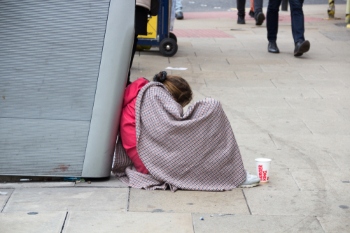
Council leaders have welcomed the publication of the Government’s Rough Sleeping Strategy but voiced concerns over the lack of any new policies to address the affordable housing shortage.
Over the weekend, the Government published the £2bn Rough Sleeping Strategy, which aims to end rough sleeping and tackle homelessness.
The strategy includes up to £500m over three years for the Rough Sleeping Initiative, which this year will help provide 14,000 beds for rough sleepers and 3,000 staff to provide tailored support across England.
It also includes the new £200m Single Homelessness Accommodation Programme. This programme promises to provide an extra 2,400 long-term supported homes for those with the most complex needs, including young people.
The Government is also expanding its Rough Sleeping Drug and Alcohol Treatment Grant programme to an additional 20 areas in England, bringing the total to 83.
Secretary of State for Levelling Up, Housing and Communities Greg Clark said: ‘Ending rough sleeping in this parliament is an important manifesto commitment.
‘We’ve made great strides towards that goal in the last few years, and today’s strategy backed by £2bn of support will give some of the most vulnerable people in our society a roof over their heads and targeted support so they can rebuild their lives.’
Minister for Rough Sleeping Eddie Hughes added: ‘No one should have to sleep on our streets and our strategy will help make that a reality. ‘We will pull every lever at our disposal so councils, working hand in hand with the voluntary, faith and community sectors, can intervene swiftly when someone is sleeping rough.’
Responding to the publication of the strategy, Cllr David Renard, housing spokesperson for the Local Government Association (LGA), said he was ‘pleased’ to see the strategy published.
He commented: ‘Better access to mental health and drug and alcohol support for people sleeping rough will give those who are struggling with these additional burdens the support they need to recover, and a cross-government commitment that no one will leave a public institution, such as a hospital or prison, to the streets is a strong preventative measure that will make a real difference.
‘More supported housing and use of the Housing First approach nationally is a positive step, and we are pleased at the focus on investing in the relationships between housing and adult social care for vulnerable people sleeping rough who require supported housing.’
Cllr Renard did raise a number of concerns however.
‘Data is key for councils, and we’re glad to see the rollout of better and more frequent rough sleeping figures, now seen quarterly instead of annually, but more detail is needed on what support there will be for councils to implement this,’ he said.
‘Additionally, we are concerned that the strategy fails to introduce anything new to address the national lack of affordable housing, or around preventing destitution for No Recourse for Public Funds (NRPF) customers, and councils would like to see the current welfare policy reformed.’
Cllr Darren Rodwell, London Councils’ executive member for Regeneration, Housing & Planning, also welcomed the publication of the strategy.
‘Progress is being made on reducing rough sleeping in the capital, and boroughs are determined to play our part in ending it altogether. This strategy and funding boost put our work on a much firmer footing and will make a real difference,’ he said.
‘Tackling rough sleeping requires a range of policy measures, as well as close partnerships between different agencies and long-term funding commitments for the frontline services keeping people off the streets.
‘Boroughs hope a similar approach of partnership between central and local government and additional resources for services can be developed for ending other forms of homelessness – especially the huge number of Londoners living in temporary accommodation.’