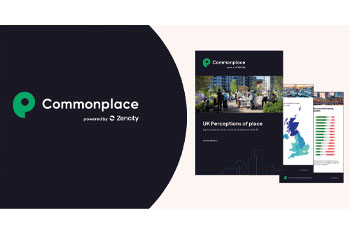
New nationally representative research, by citizens and data engagement platform Commonplace, captured 186,000 data points in under 10 days – revealing the practical drivers of trust and showing how councils can move from insight to action faster through clear communication, meaningful engagement, and demonstrable value for money.
Trust in local councils is running low across the UK, but it is not flat, and it is not random. Commonplace’s latest report, UK Perceptions of Place - Exploring why trust in councils varies across the UK, uses a nationally representative survey to show how trust is shaped by everyday, lived experience, local conditions, and the way councils communicate and involve residents.
What is striking is not only what the research reveals, but how quickly a local evidence base can now be built. In under 10 days, we reached 6,645 people and captured 186,000+ data points spanning quality of life, community characteristics, and trust in council services. Those results stream directly into the live Commonplace dashboard, where automated reporting and practical workflows turn raw feedback into usable insight. At a time when many places need to move from “research” to “delivery” faster, speed and methodology matter.
Trust, place, and the lived reality behind the numbers
Nationally, 58% of people say they are satisfied with quality of life in their community, a figure that lags behind comparable metrics in the USA. Yet the detail underneath that headline is where the value lies. For example, non-white groups report higher quality of life than white respondents in most UK regions. Black respondents report higher quality of life in 11 of 12 regions, and Asian respondents in 9 of 12. These are not marginal differences: they are signals that experience of place is nuanced, and that councils need data that is both representative and locally granular to avoid false assumptions.
Download the full report: https://www.commonplace.is/-uk-perceptions-of-place-ebook
Local priorities and pain points: a consistent top three, with regional variation
When residents describe what is working least well, three themes dominate: affordable housing availability, road maintenance, and access to living-wage jobs. These issues are widely felt, but they also vary significantly by region - reinforcing the case for locally tailored responses rather than one-size-fits-all strategies.
There is also an encouraging counterbalance. In a period of heightened national debate about inclusivity and cohesion, residents rate a sense of belonging, overall safety, and acceptance of people from all backgrounds above average. The North East and Yorkshire & Humber consistently perform strongly across these measures, evidence that some places are already building the foundations of confidence and cohesion.
The drivers of trust: value, information, and involvement
Overall, only 28% of respondents trust their local council. Younger adults are a key exception: 18 - 34s report trust at 40%, and they are more likely to feel informed, engaged, and that they receive good value for money.
The report identifies three practical trust levers:
- Value for money: people who believe the council offers good value are dramatically more likely to express high trust.
- Information and communication: those who feel poorly informed about services and benefits are far more likely to have low trust.
- Involve, consult, engage: residents who feel involved in decision-making are much more likely to trust their council.
There is also a geographic paradox: trust is highest in London (35%) despite lower reported quality of life, and lowest in Wales (23%) despite higher quality of life. This hints at an urban - rural dynamic: where residents rely less on the council in daily life, trust may be less central to their sense of wellbeing.
Staying power, churn, and what it means for service design
Even with low trust, most people expect to remain where they are over the next five years. London is the clearest outlier, with the highest intention to leave, suggesting that cost of living and housing pressures can override local attachment. Age matters too: 31% of 18 - 34s are very likely to stay five years, compared with 50% of over-55s, shaping very different needs in more mobile versus more rooted places.
Moving from insight to execution
The message is not that trust is unattainable, it is that it is buildable, if councils focus on a small number of measurable indicators, communicate clearly and consistently, and treat engagement as continuous rather than episodic. With the right tools, this can be done quickly: gather robust local evidence in days, not months, and use it to guide targeted action.
Sponsored by Commonplace.