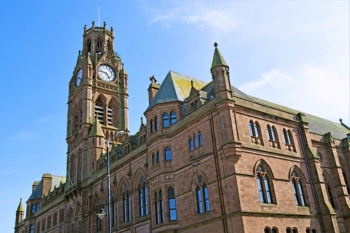
As any budding novelist will know, the most important parts of a story are the turning points where decisive change occurs, which is exactly where local government in Barrow, Lancaster and South Lakeland is today.
This story began almost fifty years ago to the day back in February 1971. The Heath Government introduced a White Paper inviting comments on a top down reorganisation of councils, including ‘Area 9’ proposals that ultimately led to the creation of Cumbria County Council.
Half a century on, the debate has come full circle with government looking to move to a single tier of local government. We are currently awaiting the outcome of the evaluation of proposals put forward before Christmas. What ministers decide and the choices they make will frame how local government reform proceeds for a generation.
Our proposal challenges the ‘all for one and one for all’ narrative of English counties who advocate single unitaries, regardless of context, on the basis they would be easier to understand and provide for greater efficiencies. Yet wouldn’t any unitary be easier to understand? And isn’t it as important to be effective as well as efficient? In the Bay we think we have a more compelling narrative than a unitary based on the existing county. Our Three Musketeers – Barrow, Lancaster, and South Lakeland councils – have a strong friendship and shared belief that this is the time to seize the opportunity to create better local government by doing things differently.
By advocating for a unitary bringing together relevant parts of Cumbria and Lancashire we would have a council where over 95% of people who live here also work here. This would allow us to make the people we serve the central character in the narrative, not the council that serves them. This underlines that this is not a debate about returning to Lancashire or staying in Cumbria. It is about making our administrative geography reflect our functional geography and working better with both.
As a unitary we will be much better placed to enhance our priority to strengthen communities by redesigning relationships across all council services. Working with communities will be a normal and integral part of all we do. Nationally, we celebrated the way the community response to COVID-19 demonstrated the value of social connections, neighbourliness, and community action. Locally, we are already committed to making this part of our everyday operations. For example, in Barrow we are developing a New Constellation, bringing together people from all walks of life to envisage a new future for the borough. This is part of our commitment to harness new talent and radically rethink priorities – essential as we plan for recovery, create good local jobs, and put residents at the heart of all we do.
We will also be able to have much greater collective impact with our local NHS partners. Together we want to work as full and equal partners to integrate health care across neighbourhoods, places, and systems, unlocking the real prize offered through preventative, compassionate and community-based health, and well-being services.
Tackling the climate emergency will be fundamental to our core purpose. Our vulnerability to flooding, sea ingress and concern over bio-diversity loss are already significant issues. But we also have natural and institutional assets and opportunities, such as being home to one of the largest offshore wind farms in the world and leading expertise in hydrogen and battery power. We have the appetite to move from declarations of a climate emergency to delivery of local action plans that help jump-start the green industrial revolution.
The simple choice would be to create just another chapter in the history of local government reorganisation, delivering much of the same on a slightly different scale. That would miss the opportunity to be bold and really rethink rather than just reorganise councils. Government should be looking to create structures that enable new councils to be more purpose-led, adaptive and collaborative. They should allow for a more radical reshaping of local public services, to enable collaboration across public services, industry, and academia and to measure value and outcomes not just efficiency. Selecting the Bay would be a story that is centred on enabling our people and our place to flourish and thrive.
Tim Pope is local government expert at PA Consulting and Sam Plum is chief executive of Barrow Borough Council.
Photo: Peter is Shaw 1991 / Shutterstock.com