There are big plans for the Oxford-Cambridge Arc region. And right up there with the bold economic growth objectives, stands world-leading environmental ambitions. Government is putting robust plans in place to back the Arc to become the UK’s innovation and science region, competing on a global platform.
The Arc has the potential to be a world-leading exemplar in environmentally sustainable growth. The local leadership backing the Ox-Cam Arc says, that if we are to successfully double the economic growth in the area then we must, as a minimum, be doubling nature and ensuring that we lead the way in zero carbon living and working.
This Spring, the Oxford-Cambridge Arc Leadership Group endorsed five Principles that will turn the Ox-Cam region into a ‘Green Arc.’
The principles address how local areas can work individually and collectively to tackle some of the biggest challenges of our time: achieving net zero carbon and climate resilience. They provide a clear regional commitment to environmentally sustainable economic growth. And central to this, is to protect, restore and enhance the environment, and creating new nature areas and natural capital assets across the Arc region.
The Principles commit:
1. For decisions about development and infrastructure to support the goal of net zero carbon at Arc level by 2040.
2. To double nature, by implementing the spatial planning mitigation hierarchy [avoid, minimise, remediate, compensate and gain], enhancing and creating new wildlife sites and linking between them, and doubling the minimum requirement of biodiversity net gain to 20% for all developments and infrastructure projects both in and out of scope of the Town & Country Planning Act.
3. To being the foremost exemplar for environmentally sustainable development, by understanding and ensuring that planned growth and development are well-designed and remain well within environment capacity limits.
4. To making the benefits of growth and development real for our communities through our environment, by investing in, increasing, enhancing, and promoting our nature-rich green spaces, walking and cycling routes.
5. To use natural resources wisely, taking action to reduce resource consumption, and working through an integrated approach to improve water, soil, air quality and waste management, supporting productivity and working towards a circular economy.
They are bold principles, but they need to be if the Arc is to succeed in its role as a world-leader in sustainability.
What’s next?
It will require the collective ambition and collaboration of all partners across the Arc for these Principles to be delivered.
A network of committed organisations and groups is already in place too – the Principles are the result of the collective work of many people in the Arc who have formed an Arc Environment Working Group. This includes representatives from the Arc Local Nature Partnerships whose members include environment NGOs and who work to help set and facilitate strategic direction for environment activity locally; local councils, LEPs, developers, businesses, business representative organisations, the Environment Agency, Natural England, and the Forestry Commission and with important contributions from central government departments.
Best practice examples are happening in the Arc; both in planning, design and development and also in renewable energy systems.
So, what’s next? Turning these intentions into actions.
The aim is for these principles to inform and become an integral part of plans, activities and delivery programmes for all bodies operating in the Arc, with local councils, universities, private sector developers and third sector organisations endorsing them.
With the assistance and leadership of Cranfield University, the principles are being translated into a regional environment strategy. The strategy will embrace everything from green spaces to housing standards and sustainable transport. From energy generation and transmission to water management and, conservation. It will set the aspirations behind these principles into clear actions that put the environment on equal footing when developing policy. For the principles to deliver the outcomes the region wants to see, the Arc’s Environment Working Group are progressing associated methodologies, metrics and targets.
Over this period, the UK presidency of COP 26 has helped to put a spotlight on our climate change and environmental commitments and actions at national level. Indeed, in the recent G7 Ministerial meeting commitment was made to halt and reverse the loss of biodiversity by 2030.
The Government has already committed for the Arc to embody England’s 25 Year Environment Plan. And aligned to significant infrastructure investment committed, the Budget 2020 confirmed that Government will be developing, with local partners, a long-term spatial framework for the region. This will facilitate a more coordinated approach to planning, helping to create beautiful, sustainable places, with high-quality design. This is our area’s opportunity as, if the Arc is to be a true world-leader, partners will need to exceed minimum standards, for example going beyond the 10% target for net biodiversity that the Government has already committed to. Government will be launching the first phase of consultation on the Arc’s spatial framework in Summer 2021.
Whilst there are some policy and investment levers that clearly only central government can pull, many tools and mechanisms to achieve local environmental sustainability ambitions do rest locally. These Principles are an example of what can be done through decisive local leadership, working collaboratively on the things that matter most. Local leaders are here to put the quality of life of citizens first. Residents say that environment must be high on that agenda.
Read the Environment Principles
Read the E-NGOs backing for the Principles
Cllr Bridget Smith is leader of South Cambridgeshire District Council and chair of the Arc Leadership Group Environment Working Group
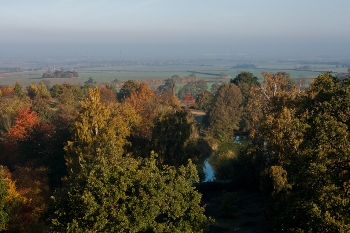
Photo: Marston Vale from Greensands Ridge, Lisa King