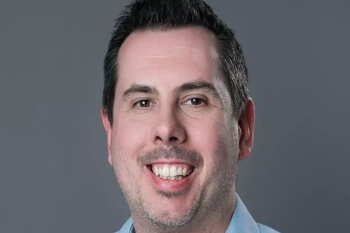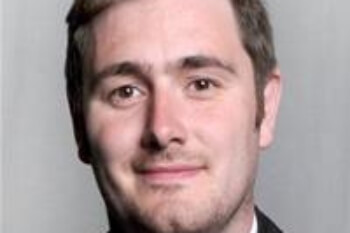
Middlesbrough mayor Chris Cooke, newly elected chair of the Special Interest Group of Municipal Authorities (SIGOMA), talks to LocalGov about a more collaborative governance model, holding a cross-party coalition together, and why councils need funding settlements that stretch a decade, not just a few years.
Chris Cooke takes over as SIGOMA chair at a pivotal moment for the body, which represents 50 metropolitan and unitary councils across England. He succeeds Sir Stephen Houghton, who stepped down as leader of Barnsley MBC in May, with Cllr Graham Morgan, Cllr Nadine Peatfield and Cllr Andrew Husband joining him as vice chairs – a line-up that itself reflects a changing political landscape, with Labour, and now Reform UK, represented at the top table.
That shift lies behind SIGOMA's move to a new proportional governance model, echoing the approach used by the Local Government Association (LGA), where the largest group elects the chair. Cooke says the more significant change, though, is how decisions get made day to day. Power is being delegated to an executive committee that previously had little real role, replacing a model where one person took most of the decisions. ‘We're spread out, so more people get a say,’ he says of the change, which was well received when members voted on it at SIGOMA's AGM. He is clear the reform was not a response to local government reorganisation (LGR), but to a simple change in political make-up within the membership.
Holding a cross-party coalition together
With a wave of new council leaders taking office after May's local elections, Cooke says SIGOMA's unifying ground remains fairer funding for councils based on need and demographics – something he believes the whole membership can get behind. Local government reorganisation is trickier territory. Because LGR decisions are made locally, Cooke says SIGOMA will speak collectively on some issues while leaving others to individual authorities to raise themselves, respecting what he calls councils' democratic right to set their own positions.
A manifesto built on funding reform
SIGOMA's manifesto, due later this year, will focus on reforming business rates and council tax alongside the wider funding system. Cooke identifies two priorities. First, embedding the recovery grant so it is treated as mainstream funding rather than viewed as a discretionary grant. Second, tackling the special educational needs and disabilities (SEND) high needs budget deficit and its uneven treatment across councils, ensuring authorities that managed their SEND budgets well are not penalised, and that lessons from those that did are shared more widely.
Alongside this, Cooke wants to solidify SIGOMA's asks on council tax and business rates reform, and says the group intends to engage closely as the incoming administration sets out its own funding proposals, given how hard-pressed SIGOMA's members are compared with much of the rest of the country. Devolution is another priority, with Cooke keen to ensure councils' role in combined authorities and their grassroots community engagement is properly recognised.
Protecting hard-won gains
Asked whether reorganisation risks undoing progress made through the fair funding review and recovery grant, Cooke says the real focus now is on embedding those gains rather than assuming they are at risk. His bigger ask is for longer funding settlements. Pointing to examples of 10-year funding deals elsewhere, he wants Government to consider extending settlement periods well beyond the current short-term cycle, with built-in check-in points to account for economic and national changes.
‘What would councils be able to do with that level of certainty?’ he asks – arguing that genuine long-term planning is only possible if councils know what they are working with for years ahead, not just one Spending Review at a time. That, alongside recognition of councils as core partners in delivering national priorities, is what he wants to see from Government as SIGOMA sets out its priorities under his leadership.