With the passing of ‘Freedom Day’ and the relaxation of most restrictions relating to the COVID-19 pandemic coming in to place it is important to take stock of where we are. It is undoubtedly the case that the development of multiple vaccines in such a short period of time and the rollout of the same is nothing short of a miracle. All those involved, from the scientists who developed the vaccines to the NHS staff and volunteers who have dealt with the rollout, should be commended. We should not however be under the miscomprehension that we are out of the woods. Society as a whole has many monumental challenges to overcome before we can find ourselves in a world which is anything close to how it was prior to the COVID-19 pandemic.
One of the biggest challenges facing our society relates to the NHS. There is no doubt that we could have not reached the point we have reached without the tremendous work of the men and women within the NHS, and it has been incredible to see how the NHS has been able to adapt itself to focus upon fighting an unprecedented pandemic in one of our country’s greatest moments of need.
It must though be borne in mind that in order to do this the NHS has had to redirect resources that would otherwise have been focused elsewhere. This has meant that an enormous backlog of investigations, operations and therapies has built up. To demonstrate this point NHS England have suggested that the number of people waiting for routines operations on the NHS is at its highest level in over 12 years and the waiting list for routine treatments on the NHS has recently topped five million people for the first time and is continuing to rise.
It is the people that are waiting for these investigations, operations and therapies who are undoubtedly the hidden victims of the COVID-19 pandemic and as someone who has spent their whole career supporting people who have sustained major trauma, many of whom have become disabled as a consequence, I have experienced first-hand as to how detrimental delays in provision of medical treatment, rehabilitation, care and support can be.
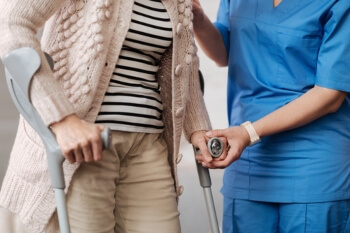
It was perhaps most alarming to learn recently that disabled people have been disproportionately impacted by COVID-19, people who are already some of the most marginalised in society. This makes it all the more important that support is available for the people that need it the most to bridge the gap whilst the NHS starts to deal with this backlog. It is in my view the responsibility of all the stakeholders in our society, including private business such as insurers who reportedly made enormous savings during the various lockdowns, to do what they can to help to alleviate this crisis and take the burden off the NHS.
It will of course also be incumbent upon local authorities to consider what they can do differently to help to meet the needs of the hidden victims of COVID-19 including people with disability who have been disproportionately negatively impacted by the pandemic. Further funding to support people with disability would be most welcome given that this is an area that has been drastically under resourced even prior to the pandemic. Whether such funding will be forthcoming given the present state of the economy and the huge debt the government has had to take on to get the country through the pandemic is another matter.
It is welcome that the department of health and social care have recently acknowledged the problem but the commitment to provide a further £2.4m of funding to charities to fund projects to help improve disabled people’s physical and mental wellbeing suggests that the extent of the issue has not been fully grasped given that this is a drop in the ocean compared to the level of funding that would be required to make a real material difference.
It is inevitable given the COVID-19 pandemic and resulting economic climate that no matter how much extra funding is provided there will still be a shortfall in terms of what is needed to give disabled people the optimum level of support to enable them to lead as independent and fulfilling lives as possible, which of course they should be entitled to do.
The key here is to provide support in as joined-up holistic manner as possible. This means all stakeholders and all people working with people with disability coming together. All people involved, from the person allocating the local authority budget, to the disability charity support worker or the lawyer supporting someone who has sustained serious injury, can provide valuable input into the best strategy to best meet the disabled persons need. I am not suggesting that there is an easy solution to be reached but open and transparent dialogue about how best everyone can work together for the common goal has to be the best place to start.
Martin Usher is partner and serious injury lawyer with Lime Solicitors. He is also a trustee of Headway South West London, a charity that supports people with acquired brain injury.