Ellie Ames 20 June 2024

Landmark fossil fuel ruling has ‘profound’ implications for planning

Landmark fossil fuel ruling has ‘profound’ implications for planning image
Image: Balakate / Shutterstock.com

A historic legal judgement has ‘fundamentally changed’ the landscape around planning permission for fossil fuel extraction, campaigners have said.

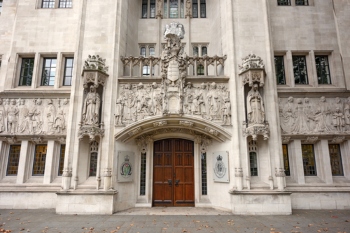
The Supreme Court ruled today that Surrey County Council acted unlawfully when it granted permission for oil drilling at Horse Hill, near Horley, without considering the climate impacts of the inevitable burning of the oil.

Surrey’s environment impact assessment failed to consider the fact that more than 10m tonnes of carbon emissions would be produced when the extracted oil was burned.

While such ‘downstream’ emissions are increasingly omitted when planning authorities consider fossil fuel projects, the Supreme Court has now recognised that the damaging impact of emissions is not limited to where fossil fuels originate, according to law firm Leigh Day.

Sarah Finch, who challenged Surrey’s decision on behalf of the Weald Action Group, said: ‘The oil and gas companies may act like business-as-usual is still an option, but it will be very hard for planning authorities to permit new fossil fuel developments when their true climate impact is clear for all to see.’

The Weald Action Group said the ‘groundbreaking’ judgement could have ‘profound implications’ for planning decisions on new fossil fuel projects.

A host of previous decisions could also be impacted by the ruling, such as the permission granted for a new coal mine in Cumbria and development of the Rosebank oil field in the North Sea, according to Friends of the Earth.

A Surrey County Council spokesperson said: ‘Council officers at the time of the planning application assessment believed that they acted in compliance with the law.’

The local authority, which approved oil drilling at Horse Hill just months after declaring a climate emergency in 2019, said planning permission for the scheme would be determined ‘in due course’.


Skills Pipelines: What local government needs to know image

Skills Pipelines: What local government needs to know

Councils and mayors are to be handed a central role in developing skills pipelines for local industries, as the Government unveils what it calls a ‘fundamental change’ to the education system aimed at tackling youth unemployment. Here's what council leaders and officers need to know.
SIGN UP
For your free daily news bulletin
Highways jobs

Caretaker

Durham County Council
£24,796 (Pro Rata)
Permanent Contract – Part Time - 32 Hours per week (6am – 9.15am 3pm – 5.45pm) Mon-Fri. Whole Time. Required to start 20th October 2026.   The Governo Consett
Recuriter: Durham County Council

Social Worker

Durham County Council
Grade 9 – Pre-Progression (£35,412-£39,152 per annum) / Grade 11 – Post Progression (£40,777-£45,091 per annum). Pay award pending.
We are seeking to recruit two temporary (six month) full-time (37 hours per week) Social Workers, to join our Adult Social Work Team at Derwentside Lo Durham
Recuriter: Durham County Council

Head of Finance - Children & Young People’s Service

Rotherham Metropolitan Borough Council
£75,585 - £80,726 (pay award pending)
This is a great place to work for people who want to make a real difference. Riverside House, Rotherham, South Yorkshire
Recuriter: Rotherham Metropolitan Borough Council

Head of Finance and Accountancy (Deputy S151 Officer)

Chesterfield Borough Council
£72,000 (inclusive of Market Supplement)
In this role, you will provide visible leadership and management across the Finance Service Chesterfield, Derbyshire
Recuriter: Chesterfield Borough Council

Director of Digital, HR & Customer Services

Chesterfield Borough Council
£97,017
Reporting directly to the Deputy Chief Executive, you will lead a diverse directorate, with responsibility for Human Resources Chesterfield, Derbyshire
Recuriter: Chesterfield Borough Council
Linkedin Banner