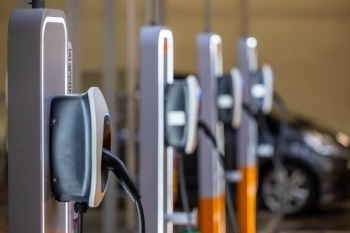
A new report has revealed significant disparities between local authority areas in electric vehicle (EV) charging provision for EV owners without off-street parking.
In some areas, the vast majority of ‘on-street’ households have a public charger within a five-minute walk, while the figure is less than 10% in others.
Net zero data analytics consultancy Field Dynamics, in collaboration with Zapmap, found a 60% increase in the number of charger locations in Great Britain between 2022 and 2024.
It looked at the charging facilities available for the 9.3 million households (32.7% of the housing stock) without access to off-street parking and calculated the percentage with a public charger within a five-minute walk, finding that more than three quarters do not.
Nationally 24.8% of these households have a charger within five minutes (up from 17.2%) in 2022, with Scotland having the highest average coverage at 28.7%, followed by England at 24.5% and Wales at 21.9%.
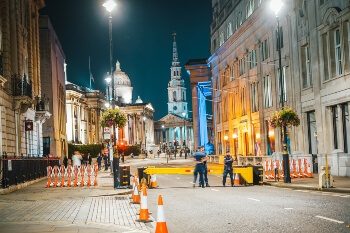
These percentages were also calculated for each local authority, with 99% of on-street households in London boroughs Kensington and Chelsea, Southwark, and Westminster found to be within a five-minute walk of a charger
For the capital as a whole the figure is 67%, which compares with 83% coverage in Brighton and Hove, 76% in Coventry and 58% in Portsmouth.
However, almost 90% of all local authorities cover less than 40% of their on-street households and more than half cover less than 20%, with 38 local authorities having less than 10% coverage.
The report calculates that if these 38 authorities continue to increase coverage at the same rate as in the last two years, by 2030 more than of them would remain below 20% coverage.
Where on-street households in London are covered by at least one charger, they typically have more than six charging locations within the five-minute walk, while the national average is less than two.
This article was originally published by Highways.
Check out: What councils need to boost EV charge point roll-out.