The Government has been urged to reform the Green Belt policy as new figures reveal there has been an increase in protected green areas.
There has been a net increase of over 24,000 hectares in the overall area of land designated as Green Belt in England since last year, the latest Government figures reveal.
In 2021-22, the statistics state, 14 local authorities adopted new local plans or neighbourhood plans, with the result being a net increase of 24,150 hectares in the overall area of land designated as Green Belt in England compared to 31 March 2021.
Over 1,600,000 hectares of land in England (12.6% of all land) is allocated as Green Belt.
Ian Barnett, national land director of Leaders Romans Group (LRG), has applauded the success of the policy but said that it is time it was reviewed.
‘Why should a 70+year old policy not be subject to a review? There can’t be much legislation dating from the 1940s that is fit for purpose today,’ he said.
‘A review of the Green Belt needs to be undertaken in the context of the needs of the country – transport, environment, housing, leisure, food, and economics. We need a review of the Green Belt as part of a national spatial plan. But what do we have instead? We have levelling up, but February’s Levelling Up White Paper contained just four references to the Green Belt and the Levelling Up and Regeneration Bill failed to mention it once.’
Karen Charles, director of LRG’s planning and design consultancy, Boyer added: ‘Few would argue for the Green Belt to be abolished, but its value would be increased if its strictures were softened somewhat.
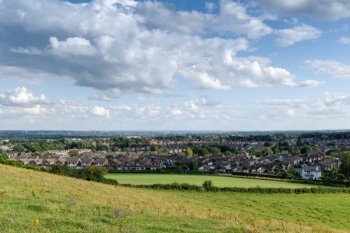
‘The broad-brush approach which succeeded in preventing post-war urban sprawl has led to some land which could benefit from redevelopment being over-protected: contrary to a widely-held belief that the Green Belt is a bucolic ring of verdant countryside open to all, much of it is inaccessible and/or preserves and protects unattractive edge-of-settlement brownfield sites – those which have potential for sustainable development.
‘Currently the development plan process which allows for land to be removed from the Green Belt for residential development in exceptional circumstances is time-consuming and comes with considerable risk. Were Green Belt legislation to allow for local flexibility, it could result in such sites coming forward for development as attractive communities and with accessible natural amenities.’