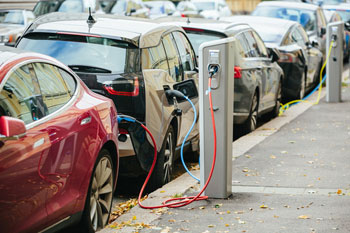
The Government is considering imposing a statutory duty on local authorities to plan and deliver for electric vehicle infrastructure.
The move is part of a regulatory review of the zero emission vehicles landscape, which could introduce a raft of new legislation and regulations to support the uptake of electric vehicles.
A consultation is being carried out through the Office for Zero Emission Vehicles (OZEV) - a cross-departmental government team - on the potential changes, including whether councils in England and Wales should have a statutory obligation to plan for and deliver charging infrastructure.
Primary legislation and regulatory shake-up
Under the wider plans, primary legislation would give ministers the power to introduce requirements in four areas:
- a statutory obligation to plan for and provide charging infrastructure
- requirements to install chargepoints in non-residential car parks
- new powers to support the delivery of the Rapid Charging Fund
- requirements to improve the experience for electric vehicle consumers
OZEV said this 'will ensure that there is a sufficient charging infrastructure and appropriate consumer protections in place to meet the needs of electric vehicle drivers'.
Ahead of any secondary legislation to introduce the statutory requirement on local authorities, the Government would consult on the duty, including any relevant definitions, metrics and other measures applicable.
OZEV said other options include placing the duty on chargepoint operators themselves, or energy companies.
Currently, local charging infrastructure provision such as on-street and rapid hubs is installed at the discretion of local authorities.
OZEV argued that while many local authorities have taken positive steps towards planning this infrastructure 'others have not yet identified what is needed and risk not meeting the current and future needs of their communities'.
The news comes after the National Infrastructure Commission recommended that Government should place a requirement on local authorities to allocate 20% of their parking spaces, including on-street, to be converted to electric vehicle charge points by 2025.
The consultation closes on 22 November. You can find out how to respond and all the details here.
For further information on this story, visit Transport Network