More than 2,200 non-native wild animals are being kept under private ownership in Britain through council-issued licences.
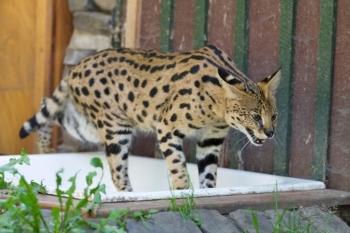
Research from the international wildlife charity, Born Free, has found that the dangerous animals include over 500 venomous snakes, almost 300 dangerous primates, 79 crocodilians, and 166 wild cats.
The data from local authorities unveils that many of the animals, such as cobras, wolves, and cheetahs, are likely being kept as pets in people’s homes. Others are kept at locations including businesses, educational facilities and sanctuaries.
Of the 350 authorities accounted for, 237 do not have any licensed animals, but 154 private addresses across 113 local authorities are in possession of licences or are undergoing the application process.
The research revealed that the licensing of venomous snakes and dangerous primates has risen since 2023, when the charity last released Dangerous Wild Animals Act (DWAA) data.
While the 1976 DWAA act was implemented to regulate the private keeping of animals that are thought to pose a risk to the public, Born Free has argued that the legislation is ‘fundamentally out of date’.
It ‘has not kept pace with the ever-changing trends in pet keeping, or our increasing understanding of animal behaviour and welfare’, the statement adds.
The charity has called for a comprehensive review of the DWAA and the ‘entire legal framework governing the trade in and private keeping of wild animals’, arguing that the weakened regulations are resulting in the suffering of animals and posing threats to public health and safety.
Comments
Born Free Patron Kirsty Gallacher said: ‘It is staggering and deeply troubling that in 2026, dangerous wild animals are still being legally kept behind closed doors in Britain.’
She added: ‘This should not be normal, and it should not still be legal. Fifty years on, these animals are still wild, still dangerous, and still being failed by the law. The Government must urgently review this outdated legislation and ultimately bring an end to the private keeping of wild animals as pets.’
Lindsay McKenna, Founder of WildSide Exotic Rescue C.I.C, commented: ‘A licence to keep a dangerous wild animal does not mean that animal is safe, happy or thriving, it simply means someone has permission to possess them. Wild animals are not pets that need better owners; they are wild creatures that should never be kept as status symbols, for entertainment, or as private possessions.’
A Defra spokesperson said: ‘Anyone wishing to keep an animal covered by the Dangerous Wild Animals Act must be carefully vetted and apply for a licence which sets out strict conditions under which the animals must be kept.’
They explained that councils should only distribute licences if they believe it would not contradict public interest where nuisance or safety issues are concerned. It is also required that the applicant and the accommodation are suitable, as well as necessitating that the welfare of the animal is ensured.
.png)