William Eichler 07 September 2018

Westminster CC forced to play phone box ‘whack-a-mole’

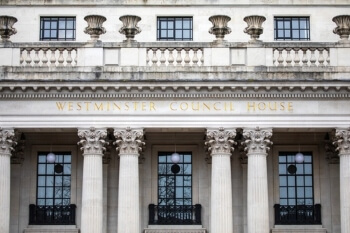
Westminster City Council has called for greater powers to reject planning applications for new phone boxes.

The council has received applications for 300 new boxes in two years and rejected 170 of these — a time consuming and costly process.

Historic planning rules treat phone boxes as ‘permitted development’ and so planning permission is not required, which makes it difficult for councils to reject them.

Westminster CC has over 1,000 phone boxes and last year the council conducted a survey which revealed many of these were neglected, out of service and/or disused.

The council has now received applications from BT for a further 99 new structures incorporating advertising screens as well as telecommunications equipment.

The authority has previously called for a change rules that would enable the council to require the removal of underused or redundant boxes and greater powers to resist new ones.

‘Arcane planning rules have left the council playing a never ending game of whack-a-mole with the phone boxes popping up across the city,’ said the cabinet member for planning and public realm, Richard Beddoe.

‘We have had some success refusing and removing these monstrosities but telecoms companies can see the opportunity to make a quick buck and the applications keep pouring in.

‘These aren’t the popular, historic red boxes we all love but ugly oversized advertising structures posing as telephone boxes cluttering our iconic streets.

‘We need Government and Ofcom to act urgently and prevent councils from facing a constant stream of expensive, lengthy planning battles.’ 

The Local Government Association (LGA) warned in January that high streets were becoming cluttered with so-called ‘Trojan’ telephone boxes which are essentially just advertising billboards.

A sample of 12 council areas showed a combined rise of 927% in applications for telephone kiosks under permitted development rules between 2015 and 2017.


Skills Pipelines: What local government needs to know image

Skills Pipelines: What local government needs to know

Councils and mayors are to be handed a central role in developing skills pipelines for local industries, as the Government unveils what it calls a ‘fundamental change’ to the education system aimed at tackling youth unemployment. Here's what council leaders and officers need to know.
SIGN UP
For your free daily news bulletin
Highways jobs

Caretaker

Durham County Council
£24,796 (Pro Rata)
Permanent Contract – Part Time - 32 Hours per week (6am – 9.15am 3pm – 5.45pm) Mon-Fri. Whole Time. Required to start 20th October 2026.   The Governo Consett
Recuriter: Durham County Council

Social Worker

Durham County Council
Grade 9 – Pre-Progression (£35,412-£39,152 per annum) / Grade 11 – Post Progression (£40,777-£45,091 per annum). Pay award pending.
We are seeking to recruit two temporary (six month) full-time (37 hours per week) Social Workers, to join our Adult Social Work Team at Derwentside Lo Durham
Recuriter: Durham County Council

Head of Finance - Children & Young People’s Service

Rotherham Metropolitan Borough Council
£75,585 - £80,726 (pay award pending)
This is a great place to work for people who want to make a real difference. Riverside House, Rotherham, South Yorkshire
Recuriter: Rotherham Metropolitan Borough Council

Head of Finance and Accountancy (Deputy S151 Officer)

Chesterfield Borough Council
£72,000 (inclusive of Market Supplement)
In this role, you will provide visible leadership and management across the Finance Service Chesterfield, Derbyshire
Recuriter: Chesterfield Borough Council

Director of Digital, HR & Customer Services

Chesterfield Borough Council
£97,017
Reporting directly to the Deputy Chief Executive, you will lead a diverse directorate, with responsibility for Human Resources Chesterfield, Derbyshire
Recuriter: Chesterfield Borough Council
Linkedin Banner