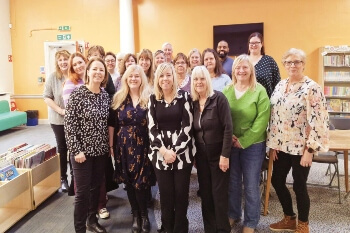
Emma-Louise McLellan looks at the important – and often life-changing – work GLL has helped facilitiate within prison libraries.
As policymakers seek effective ways to reduce reoffending and support successful rehabilitation, prison libraries represent one of the most valuable yet often overlooked resources within the criminal justice system.
The evidence linking education to reduced reoffending is well established. Research by the Ministry of Justice has found that prisoners who participate in learning activities are significantly less likely to reoffend and more likely to secure employment after release. Prison libraries play a critical role in supporting these outcomes, providing access to educational materials, digital learning opportunities, legal information and dedicated spaces for study and self-development.
Delivering impact at scale: GLL’s model
Since 2012, GLL has delivered prison library services across England and Wales and currently manages 11 prison libraries. As a staff-owned charitable social enterprise and cooperative, the organisation’s approach is rooted in the belief that access to reading and education can be transformative.
GLL’s organisational model sees it reinvest surpluses directly into service development, workforce capability and community benefit, rather than distributing profits externally. This enables a longer-term focus on outcomes and supports continued investment in skilled librarians, innovative programming and partnership working across education and rehabilitation services.
The model also fosters a strong sense of ownership and professional accountability among staff, who are directly invested in the success of the services they deliver. In practice, this has helped support consistent service delivery, high levels of engagement and a willingness to innovate through initiatives ranging from family literacy programmes to creative engagement projects and targeted support for individuals who may be least likely to participate in formal education.
From engagement to transformation
One case in point is the work that GLL librarians have been doing at HMP Morton Hall Library since 2023. A proactive approach to engagement with prisoners, involving collaboration with teams across the prison, including Education and Healthcare, resulted in the introduction of a range of new initiatives and a commitment to promoting reading, learning and wellbeing. In the subsequent two years there were nearly 3,000 more library visits representing a 42% increase, along with an increase of over 20% in book issues.
Recent research has reinforced the wider value of prison libraries. Arts Council England’s report Raising the Profile of Prison Libraries highlighted their contribution to rehabilitation, wellbeing and positive behaviour, while emphasising the important role played by professional librarians in providing access to literature, culture and trusted information.
The report also identified a continuing lack of awareness about the full scope of prison library services. While books and reading remain central to their offer, libraries increasingly support digital inclusion, creativity, wellbeing and family engagement.
Earlier this year, GLL’s library team at HMP Wandsworth hosted acclaimed novelist Sebastian Faulks to discuss his latest work, The Seventh Son and Bonnie Garmus the award-winning author of Lessons in Chemistry. Speaking candidly about creativity, perseverance and overcoming rejection, Bonnie encouraged attendees to recognise the value of their own experiences and aspirations. For many participants, it was their first opportunity to engage directly with a published author.
Such initiatives encourage individuals to imagine a future beyond their current circumstances and to engage positively with learning and self-development.
Strengthening family connections
The value of prison libraries is particularly evident in programmes designed to strengthen family relationships. Maintaining family connections is widely recognised as one of the most significant factors in reducing reoffending, yet imprisonment places considerable strain on parents, partners and children.
In 2025, GLL piloted ReadConnect at HMP Parc in Wales. The programme helps prisoners develop storytelling and reading skills that can be used during family visits, telephone calls and other forms of contact with children and young relatives. Participants also receive in-cell activity packs designed to support shared literacy activities with family members outside prison.
Initiatives such as Raising Readers at HMP Lincoln have also had positive results. Here prisoners choose books for their children to read, so helping families share stories despite being separated by imprisonment. Introduced in 2024, the number of books distributed through Raising Readers has increased by 170% since its launch.
Another success story has been the expansion of the StoryBook Dads programme, which enables fathers to record stories for their families. A new focus has seen participation grow steadily, with recordings increasing by nearly 40% over the past two years.
These projects help maintain meaningful relationships and create positive shared experiences despite the challenges of imprisonment and the long-term importance of this work should not be underestimated.
Ministry of Justice data estimates around 192,000 children in England and Wales have a parent in prison. While research consistently demonstrates that parental imprisonment can increase the risk of future offending, substance misuse and poor mental health. At the same time, prisoners who maintain strong family relationships are less likely to reoffend following release.
Libraries, prevention and public value
The growing evidence of the impact of prison libraries is underlined by Arts Council England’s research, published earlier this year, highlighting the positive links between regular library use, improved behaviour and stronger relationships between prisoners and staff.
As public debate continues to focus on prison capacity, rehabilitation and public safety, there is a strong case for recognising prison libraries as an important part of the wider rehabilitative infrastructure.
The work of GLL’s dedicated prison libraries team demonstrates how a long-term, socially driven model can unlock the full potential of prison libraries as engines for change and help them fulfil their purpose: opening doors to learning; strengthening connections and relationships; and creating opportunities for a more positive future.
Emma-Louise McLellan is Prison Libraries Partnership Manager at GLL. Visit www.gll.org to find out more about these and other services from GLL
Sponsored by GLL.
.png)