There must have been much arm-twisting and favours called in across Whitehall and Westminster judging by the armistice that appears to have broken out over this year’s council tax rises.
Plainly, the LGA does not want to start off on a wrong footing with the new PM in June by having to defend high tax rises and accusations of stoking inflation. Nor, in turn, does the new PM want to have another council tax row to sort out, just as he enters his honeymoon in office and with a general election likely in the next 12 months.
In autumn 2004, faced with a spring election and big council tax rises, the-then local government minister, Nick Raynsford, called in Sir Michael Lyons to head the row off at the pass. Sir Michael has been reviewing ever since, and finally reports in March. So Gordon Brown cannot use the excuse of yet another review to kick this political hot potato into touch, to mix metaphors. And he, more than anyone, must be well aware of the extra costs on councils from elderly care and ‘shunted’ NHS projects which, sooner or later, will end up at his door, or at least that of the next chancellor’s, probably Ed Balls.
So, the 3.5% rises so far estimated by the LGA from its survey this week, defuse a potential headache for the incoming PM, allowing both sides to keep their powder dry for a few months longer.
As it happens, the LGA’s survey followed news that the Office of National Statistics had set up a new personal inflation indicator, so distrustful had the public become of the official headline rate. A flurry of newspaper stories suggested that inflation could be as high as 10% in some households. Then came the interest rate rise. And, of course, earlier this month, train fares increased well above inflation.
So the 3.5% ‘average’ predicted by the LGA from its survey suddenly appeared a model of moderation. Even the Daily Telegraph this week said the average was below inflation, and pointed out the extra unfunded costs from adult care and NHS shunting.
The LGA couldn’t have put it better itself. It must be quietly pleased that its message is finally getting across.
Michael Burton
Editor, The MJ
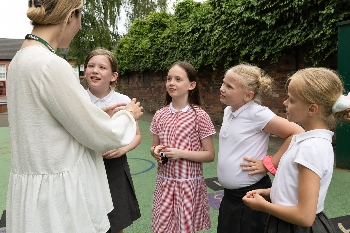
Better Results, Smarter Spending: AllChild in Wigan
Wigan Council and AllChild are proving that long-term, community-driven programmes can improve outcomes for children while reducing pressure on local services and public spending. LocalGov finds out more.