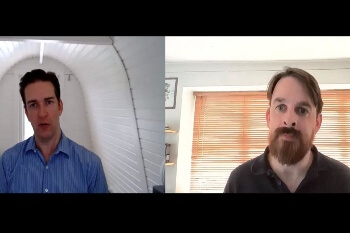
Max Stanford, head of Impact and Evaluation at Coram, discusses a new pilot study looking at systemic practice as part of the Supporting Families Programme.
Last year the What Works for Early Intervention and Children’s Social Care led a review of the current evidence around practice and delivery of the Department for Levelling Up, Housing and Communities’ Supporting Families Programme. This review, along with previous research, has identified systemic practice as a promising approach to improve outcomes for families facing disadvantage. Systemic practice has its roots in systemic therapy which focuses on group relationships or networks, such as family and friends, rather than solely on an individual’s thoughts and feelings. It is widely used in clinical settings including the NHS, as well as increasingly in social care. Systemic practice formed a large part of the Reclaiming Social Work (RSW) Model which found evidence of high quality, family focused and strengths-based practice that built families and young people’s capacity to address their own issues more effectively.
Following on from a number of feasibility studies published last year which looked at areas which had embedded systemic practice and showed signs of positive impact on keyworkers and the families they worked with, the Department for Levelling Up, Housing and Communities has commissioned a pilot study to understand the effectiveness of systemic practice within the Supporting Families Programme.
A consortium led by Coram including the Institute of Family Therapy (IFT) will look to support local authorities to embed systemic practice through:
• Systemic training by accredited IFT systemic tutors including five days of CPD certified training for all keyworkers over 10 weeks, plus an additional 10 days of training. This will result in a Foundation Course in Systemic Practice for a number of keyworkers to becoming ‘Systemic Champions’, supporting the embedding of systemic practice across keyworker teams.
• Funding local authorities to hire a systemic practitioner qualified to an intermediate level in systemic practice and funded for the duration of the trial to work with keyworker teams to embed systemic practice. This would include providing ongoing targeted training, monthly group reflective practice sessions, one-to-one consultation for key workers and support the use of systemic tools such as genograms and outcome measures. To boost retention and sustainability, IFT would deliver qualifying level training within the pilot to become a fully qualified systemic psychotherapist.
• Support from IFT including a Systemic Practice Virtual Hub providing an administrative resource and networking centre for all keyworkers, embedded Systemic Practitioners and keyworker Systemic Champion keyworkers across the local authorities. This will be overseen by an IFT Systemic Psychotherapist Delivery Lead who will support the local authorities in embedding systemic practice.
The aim is that this will help to improve keyworker practice in systemic, whole family working to ensure that children and families in need have the right support at the right time.
The pilot study will see 12 local authorities randomly selected: six local authorities will deliver the systemic practice model, while the other six will act as a control group and not embed systemic practice. The local authorities not delivering the model will be provided with financial and technical support to collect data throughout the pilot and with training in systemic practice after the pilot has ended in late 2025.
The Supporting Families Programme is inviting local authorities to submit expressions of interest to participate in the pilot study via Coram by 11 March 2024. The authorities taking part in the pilot study will be informed in April with the preliminary set up starting in May before the pilot begins in September 2024, running until December 2025. The evaluation will be led by Coram, with Ecorys, a research organization.
This groundbreaking study will be vitally important in driving the evidence forward on the effectiveness of systemic family practice in local areas and more broadly around what effective keyworker practice looks like. These valuable findings will then inform the development of the Supporting Families Programme delivery and wider Early Help policy including the Government’s reform of children’s social care and its strategy: Stable Homes, Built on Love.
The Department for Levelling Up, Housing and Communities’ Supporting Families team, along with Coram and IFT, will be hosting a webinar on Wednesday 31 January 2024 3pm-4.30pm for local areas to provide more information about the Supporting Families systemic practice pilot study and the Expression of Interest process. You can register to join the webinar at https://forms.office.com/e/y1VZ9CFYKs?origin=lprLink.