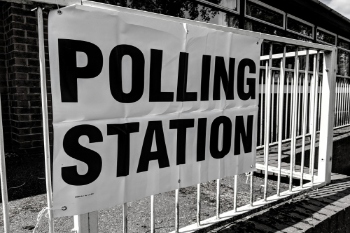
With local elections nearing, rising abuse fears are deterring candidates - this analysis explores risks, definitions, and new guidance to support safer campaigning.
Ahead of the 2026 local elections, prospective and current councillors may be feeling apprehensive about the possibility of experiencing abuse or harassment while campaigning.
According to the Electoral Commission’s candidate research about last year’s local elections, nearly 71% of respondents revealed that a fear of abuse had caused them to avoid some campaign activity, with 61% confirming that they had encountered harassment or security threats.
Amid the rising rates of harassment, intimidation, and abuse towards councillors and prospective councillors, the LGA has warned that the ‘key democratic principles of free speech, debate and engagement’ are being thwarted. And although serious cases of abuse and intimidation are rare, councillors are facing increased safety risks and negative wellbeing outcomes due to the prevalence of these issues.
While the ability to voice varying political views is essential to the function of a democracy, the LGA has emphasised that it is important to distinguish healthy debate from unacceptable conduct.
What constitutes harassment and abuse?
Common concerns faced by candidates can include threats and verbal abuse, continued unwanted contact, and discriminatory behaviour.
The LGA confirms that actions listed under the Protection from Harassment Act include phone calls, letters, emails, visits, stalking, social media abuse, threats, damage to property, and bodily harm. If they occur more than once, these actions constitute harassment – with intimidation being considered a form of harrassment by the Commonwealth Parliamentary Association.
Abuse can involve a single or repeated act which violates someone’s human and civil rights, whether physical, verbal or psychological, according to the Home Office and the Department of Health’s Guidance on Developing and Implementing Multi-agency Policies and Procedures to Protect Vulnerable Adults from Abuse.
Support for councillors
A framework to help councillors facing harassment and abuse has been developed by the LGA. The SHIELD principles are designed to support councillors in mitigating risk and managing incidents if they occur.
- Safeguard
The first principle encourages a zero-tolerance approach to intimidation, abuse, and threats. The LGA advises protecting oneself both online and in-person by seeking safety advice.
- Help
If required, always ask for help – ensure one’s own safety before acting. It is also advised to call 999 in the case of an immediate threat.
- Inform
The LGA recommends challenging behaviour – only if it is safe to do so – by expressing that the action is perceived as intimidating or abusive.
- Evidence
It is encouraged that councillors collect evidence of any abusive communications they experience, as well as keeping track of witnesses.
- Let People Know
Incidents should be reported to the relevant authority – including the police if necessary.
- Decide
Councillors are urged to decide whether to proceed with the interactions or otherwise end the engagement with the individual via social media, as well as thinking about how to prevent further approaches from them in person.
Separately, the LGA offers guidance about responding to residents who have additional needs. It highlights that some residents may require adjustments to facilitate equal and fair opportunities for engagement, but emphasises that aggression or threats are never acceptable and should be reported as usual.
Sector recommendations
Among the organisations striving to tackle abuse and harassment towards candidates is the Jo Cox Civility Commission, run by The Jo Cox Foundation. The foundation was created to honour the legacy of Jo Cox, the former MP for Batley and Spen, who was tragically murdered in 2016.
The commission provides practical recommendations for different sectors to help meet its goal of ending violence towards elective representatives. Its renewed call to action in February provides examples of best practice across governments, parliaments, local government, the police, political parties, politicians, regulators, and social media companies.
The recommendations include a call for political parties to enforce codes of conduct, for governments and the police to strengthen their support for protective processes, and for candidates to pledge to campaign respectfully.
Olivia Field, Chief Executive of The Jo Cox Foundation, said: ‘One of the biggest threats to the functioning of our democracy is violence, abuse and harassment towards those who serve in public life and their families. Too many candidates and elected representatives no longer feel safe to participate fully in politics, and some are choosing not to stand at all.’
Respectful campaigning guidance
The Electoral Commission has similarly set out six principles to guide safe and respectful campaigning in the May elections:
- Issues-based campaigning – outlines that policies and issues should be the focus of campaigns, rather than personal attacks.
- Respect for everyone participating – applicable to both online and offline conduct.
- Safety of everyone participating – upholds the physical and mental wellbeing of all involved in the democratic process.
- Respectful communication – emphasises that character defamation and the use of hate speech, inflammatory or discriminatory language are unacceptable.
- Honest campaigning – encourages truthfulness and transparency, while categorising deliberate misinformation and disinformation as impermissible.
- Acceptance of lawful outcomes – states that disputes should only be carried out through lawful and legitimate processes.
The Electoral Commission has confirmed that the principles are not formal guidance – they are advisory. However, the effect of the principles’ practical use is to be assessed after the May elections, with the aim of creating a full code of conduct based on the initial guidelines.
Ultimately, harassment and abuse should not be tolerated under any circumstances – nor should it prevent councillors from engaging with residents and taking part in elections. As Olivia Field argues, ‘no one should have to risk their safety to take part in democracy’.
However, with the right protocols in place to protect candidates, alongside an awareness of educational materials about respectful campaigning, the May elections could be approached and carried out with a greater sense of safety, and a reduced fear of unwanted attention.
.png)