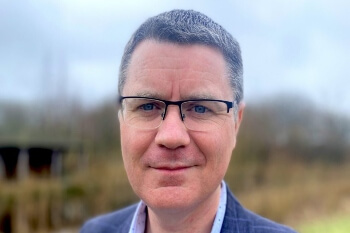
As he took up his post as head of the IDeA, Rob Whiteman, embarked on a consultation process about the future of the agency. Here, he reveals some of his findings, and his organisation’s response
Just before joining the IDeA, over two months ago, I commissioned a survey of chief executives to find out what support the LG Group should be providing to local government.
We had more than 70 responses from councils, as well as some of our key partners and, in my first few weeks in post, I’ve been following this up with discussions with leading members and officers across the country.
The messages about the challenges ahead for local government, and the offer the LG Group needs to make in response, have been consistent. It’s no surprise that productivity and efficiency are top of the list for many.
Support is needed for the new governance and partnership arrangements which are being developed in many local places. There’s a lot of interest in involving users in service design, customer insight and new methods of engaging with the public.
Developing political leaders continues to be an important theme, with a focus on the community leadership role of councillors, as well as the core task of leading councils. Many of respondents fed back that they value peer review and support from experienced councillors and officers. They agree with the idea of sector-led improvement as an alternative to top-down inspection regulation – although any new approach should help with reducing the burdens on councils – not add to them.
There is general recognition of the need to strengthen benchmarking across local government, and the call for a strong voice at the centre, speaking out for good practice and innovation.
This feedback is timely. As some readers will be aware, over the last few weeks, we have agreed with the secretary of state to remove the legal structures which currently operate in the LG Group, in return for agreement on the outcomes we will deliver that the sector has identified it needs – although with significantly-reduced funding. As the events of recent weeks have shown, this has got to mean helping local government deliver with less, as well as helping councils get maximum benefit for local people from the Government’s proposed shift of power from Westminster. We’ve done some initial thinking, based on councils’ feedback, about the outcomes we should sign off with the Government. Supporting councils in creating strong, local economies, in particular, their new role leading local enterprise partnerships, is likely to be an important area.
We are already providing support with this, through our experienced peers, and also the launch, later this month, of a dedicated online community of practice for members, officers and civil servants to share ideas and approaches from across the country. Equipping councils to lead change which enables local public services to be run on much smaller budgets is likely to be another important area of work for us.
As the Government culls quangos and multiple funding streams, we are proposing to support innovation and the development of leading-edge practice in the roll out of place-based budgets. Local politicians have a key role to play in all this, as well as galvanising social renewal and achieving the ‘Big society’ vision of the new government.
Our offer will need to include development programmes and support to ensure councillors have the skills and confidence to broker a different set of relationships between citizens and the state. As the public sector cuts hit home, they will need to lead their local communities through difficult decisions, working across traditional boundaries with partners, including the voluntary and community sector, while engaging neighbourhoods and local people.
To help councils improve their productivity, over the last few weeks, we have started work with partners across the sector, including RIEPs, on a national productivity programme. One strand of this is to help with redesigning services and processes, focusing on high-cost areas, such as adult care, children’s services and waste management.
We are looking to improve spend mapping and data collection with robust financial and performance benchmarking for the whole of local government. We will also need to support councils in delivering the workforce changes necessary for major service and organisational transformation.
And finally, we are developing proposals for focused, effective and proportionate self-regulation. We would achieve this by developing our peer support and peer review services, as well as providing direct support to councils which are struggling or at risk of failing.
This is very much our initial thinking, and we’ll be consulting with all parties further over the next few months to make sure we’ve got our priorities right. We are kicking this off with a session with leaders and chief executives at this week’s LG Conference, led by Cllr David Parsons, chair of the LGA’s improvement board, and myself.
We’ll be sending out a consultation document on this in August but, in the meantime, please feel free to contact me direct with you views at [email protected]
Rob Whiteman is managing director of the IDeA