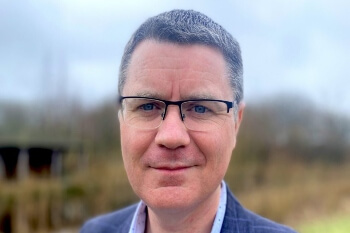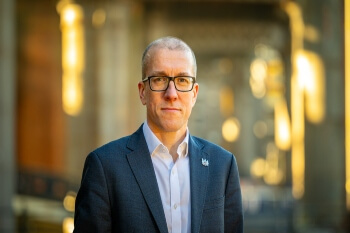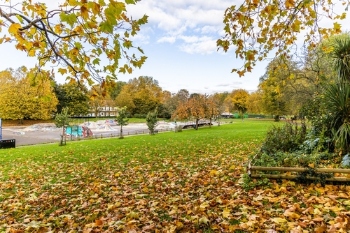
Green Flag Award scheme manager Paul Todd tells LocalGov why councils weighing cuts to green spaces are missing the bigger picture – parks can ease pressure on social care, cut crime, and help residents cope with a warming climate, if local authorities invest in them properly.
With parks funding sitting outside statutory services, green spaces are often first in line when councils look for savings. Paul Todd, who runs the Green Flag Award scheme, thinks that is the wrong way to look at it entirely. ‘It's not either or,’ he says. ‘Parks and green spaces are part of the solution.’
Easing the social care burden
Todd's central argument is that well-run parks are not a discretionary extra, but a cost-saver hiding in plain sight. He points to research suggesting every £1 spent on parks and green space returns £7 in reduced health costs and argues councils should be weighing park investment against their social care budgets rather than in isolation.
Active residents need less health support, he says, and parks also do quiet, unmeasured work reducing isolation and building community networks. He describes hearing from people in social housing who visit their local park daily and have built a network of contacts there that they now turn to instead of housing providers or social services. ‘Sometimes we don't put value to that,’ he says, because that kind of informal support ‘sometimes is not measured, but it happens.’
Parks also act as neutral ground where different parts of a community can mix, which Todd says can help councils manage cohesion challenges that would otherwise cost money to address directly. The flip side, he warns, is that a neglected park becomes a liability rather than an asset: an ‘unloved’ space tends to attract antisocial behaviour and crime, shifting costs onto councils in a different form. Investment in upkeep, he argues, should be judged against that wider ledger.
A safety issue councils can act on cheaply
Todd has also worked on the Safer Parks for Women and Girls guidance, prompted by research showing a stark gap in perception: 89% of professionals felt their parks were safe for women and girls, compared with just 37% of women and 22% of girls surveyed.
The reassuring message for cash-strapped councils, he says, is that many fixes cost little. Visible staff on site and the simple presence of other women using a park both make women feel safer, while overgrown shrub beds and poor sightlines send the opposite signal. ‘It's like the broken window syndrome,’ Todd says – a scruffy, poorly kept park signals it is unwatched, encouraging the very behaviour that keeps women and girls away.
His advice to local authorities is practical: walk the park with women and girls from local schools and community groups, find out where they feel unsafe, and fix what can be fixed. Some of that, he says, is basic maintenance – keeping sightlines clear, sorting broken benches, emptying bins – rather than costly capital works.
Preparing residents for a hotter future
Councils also have a growing role to play using parks to protect residents from climate change, Todd argues. Green spaces help cool towns and cities, reduce flood risk and store carbon, while patterns of use are shifting too, with evening visits likely to grow as daytime heat becomes harder to bear – something he says councils will need to plan for, particularly for older and vulnerable residents.
That is already changing how councils need to manage their sites. Todd recalls a gardener at a long-standing award-winning park telling him that mowers used to be put away each winter. Not anymore: ‘We mow all year round now,’ reflecting the loss of a reliable seasonal pause in growth.
What Todd wants from government
Ultimately, Todd argues councils cannot address this alone, and wants parks treated as essential national infrastructure, similar to roads or housing, with sustained funding and workforce investment to match. He would like every park assessed on a regular cycle so Government and councils can see where quality and access are weakest – typically in the most deprived areas – and target resources accordingly.
‘These are spaces that are of local and national importance to people's lives,’ he says. ‘They need that recognition at the highest level.’