Chris Ames 05 September 2018

London councils launch low emission zones

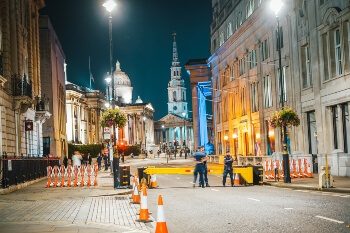
Two London councils have restricted nine streets to ultra low emission vehicles (ULEVs) during peak times.

The restrictions have been brought in by Hackney and Islington councils as a way of addressing pollution in the congested City Fringe area close to Old Street station.

The ULEV-only streets, which the councils said are the first of their kind in the capital, came into force on Monday (3 September).

With limited exceptions, petrol and diesel vehicles and all other vehicles emitting more than 75g/km of CO2 will be banned from the nine streets between 7 and 10am and 4 and 7pm from Monday to Friday. Vehicles permitted to use the streets during this time include all 100% electric and hydrogen vehicles and some of the least polluting hybrid vehicles.

Cllr Feryal Demirci, deputy mayor of Hackney, said: ‘Failing to act on poor air quality, which causes nearly 10,000 premature deaths across London every year, is not an option, and that’s why we’re being bolder than ever in our efforts to tackle it.

‘We’re thrilled to be launching our Ultra Low Emissions Streets - the first of their kind in the UK - which will reclaim the streets from polluting petrol and diesel vehicles, and improve the area for thousands of people every day.’

Residents and businesses with addresses and existing parking permits or vehicles with associated off-street parking in the ULEV-only streets will be exempt from the restrictions.

Non-exempt vehicles will face a Penalty Charge Notice if they enter the streets during peak hours.

The scheme is being funded from the Mayor of London’s Air Quality Fund, and the Office for Low Emission Vehicles' Go Ultra Low City Scheme.

The restrictions cover Rivington Street, Charlotte Road, Cowper Street, Singer Street, Tabernacle Street, Paul Street, Ravey Street, Willow Street and Blackall Street.

This story first appeared on Transport Network

Skills Pipelines: What local government needs to know image

Skills Pipelines: What local government needs to know

Councils and mayors are to be handed a central role in developing skills pipelines for local industries, as the Government unveils what it calls a ‘fundamental change’ to the education system aimed at tackling youth unemployment. Here's what council leaders and officers need to know.
SIGN UP
For your free daily news bulletin
Highways jobs

SEND Participation Engagement Officer

The Royal Borough of Kensington & Chelsea Council
£40,404
You’ll also represent young people’s perspectives at service level meetings and champion robust safeguarding practices London (Greater)
Recuriter: The Royal Borough of Kensington & Chelsea Council

Social Worker, Young People with Disabilities (16 - 25)

Essex County Council
£36124.0000 - £51834.0000 per annum
Social Worker, Young People with Disabilities (16 - 25) mid TeamPermanent, Full Time£36,124.00 to £51,834.00 Per Annum Location
Recuriter: Essex County Council

Head of Housing Management

Redbridge London Borough Council
£89,037 to £92,538
You’ll enhance our emphasis on quality assurance and getting things ‘right first time’ – making better use of technology in our approach London (Greater)
Recuriter: Redbridge London Borough Council

Head of Local Taxation

Redbridge London Borough Council
£79,119 - £82,368
This is a key leadership role in the Council, with responsibility for the effective and efficient collection of business rates and council tax London (Greater)
Recuriter: Redbridge London Borough Council

School Crossing Patrol Officer - Vacancies across Essex

Essex County Council
Up to £13.46 per hour
School Crossing Patrol Officer - Vacancies across EssexPermanent, Term Time£13.46 per hourLocation
Recuriter: Essex County Council
Linkedin Banner