For all their plus points, anyone involved in LAAs will regale you with tales of the bureaucratic frustrations they entail.
So, can a number of councils join together in a sub-regional multi-area agreement (MAA) without getting caught in a tangle of red tape and political complexity?
The current Local Government and Public Involvement in Health Bill raised the prospect of MAAs and further detail was provided in the Treasury’s recent sub-national review.
The review says MAAs will allow groups of councils to, ‘manage policy at the right spatial level’, and agree collective targets. It sets out the principles behind them (see box) and says the aim is to, ‘streamline decision-making and minimise bureaucracy’.
Further guidance on MAAs will be published by the end of the year, likely to tie in with guidance on LAAs. The Government will consider whether a duty to co-operate, described in paragraph 6.36 of the Local Government Bill, should be applied collectively to authorities taking part in an MAA. This would require primary legislation.
But local government minister, John Healey, told The MJ last week that while legislation might be needed, councils wanting to form MAAs should not wait for the Government to tell them to do so.
The first MAAs will be formally in place by June 2008. So far, councils in areas including Tees Valley, Greater Manchester, Pennine Lancashire, London Olympics boroughs and the Fylde Coast have already started putting MAAs in place.
Paul Raynes, programme director at the LGA, points out that councils are already working together and MAAs are, ‘a badge’ for that.
‘Councils have demonstrated they are perfectly capable of working across parties. They don’t just want a vehicle for closer working. They want decision-making powers to be devolved, for example around skills and employment, transport or planning and housing.’ He adds: ‘I don’t see MAAs as being super LAAs.’
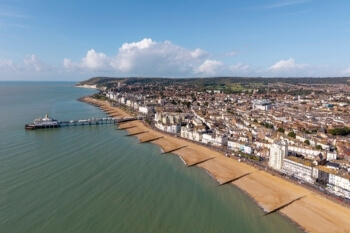
Case study: The Fylde Coast MAA
Councils in the Fylde Coast have high hopes for their MAA.
Graham Pinfield, head of policy and research at Blackpool Council, has been working on the Fylde Coast MAA with Fylde BC and Wyre BC. He says: ‘The MAA brings spatial coherence and looks at problems people identify with. It allows long-term solutions, efficiency gains, enables us to wield more influence regionally, and turns place-shaping from an amorphous concept into a reality.’ The Fylde Coast partnership covers five strategic issues – economic development, tourism, planning, transport and housing. Plans so far include collective branding, using wind energy, shared refuse collection and recycling, and making planning consistent across the three councils. The councils involved were given £65,000 funding from the North West Improvement Network to work on MAA plans. Blackpool was previous controlled by Labour, but all three authorities are now Conservative.
Cllr Peter Callow, leader of Blackpool Council, says: ‘The MAA will be meaningful to local people as the Fylde Coast works as a functional area.’
Cllr John Coombs, leader of Fylde BC, comments: ‘MAAs are good for big issues and promoting collaborative leadership.’ And Cllr Russell Forsyth, leader of Wyre DC, says: ‘Politically, it is working much better than we thought, as it is meeting the joint expectations of the three authorities.’
Neil McInroy, chief executive of the Centre of Local Economic Strategies (CLES) says: ‘If carried out correctly, MAAs could be much more efficient, energising, strategic, flexible and penetrative than LAAs. They have the potential to change the way councils collectively address issues.’
MAAs can bring greater coherence when tackling problems which cross borough boundaries, such as inward investment, tourism, climate change, transport and housing. They can also help take forward plans for city regions, rural partnerships, and be a mechanism to overcome difficulties with LAAs in two-tier authorities.
But, there are potential pitfalls. Councils controlled by different parties can work together on MAAs where something is a shared political priority. Another barrier will be the willingness of councils to let go of control and pool resources.
It is necessary for all authorities working together to be totally clear about what they are trying to achieve, and what they are prepared to contribute from the outset.
Relationships need to be cemented at the highest level politically. Mr McInroy says: ‘We have to make sure they don’t get bogged down in the minutae of targets.’
CLES is currently supporting authorities in the Fylde Coast area in the development of their MAA (see box). These and other authorities working on MAAs are enthusiastic about the possibilities they offer.
And everyone hopes the Government’s promise of not subjecting them to more red tape holds true n