Mete Çoban talks to LocalGov about London's readiness for extreme heat, the operational strain on council fleets, and why every borough now needs a heat plan
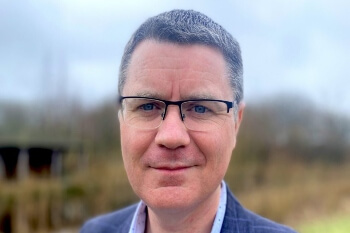
As London swelters through another record-breaking summer, Mete Çoban, the Deputy Mayor for Environment and Energy, is candid about the scale of the challenge facing the capital. ‘I don't think anywhere in the world is prepared for the level of unprecedented heat waves that we're starting to see,’ he says, speaking from Hackney, the borough where he once led on climate and environment as a cabinet member.
That admission sits at the heart of Heat Ready London, the Mayor's new heat resilience plan launched in June – coincidentally, Çoban notes, ‘on the hottest week’ of the year. The plan followed the London Climate Resilience Review and Operation Helios, which brought together more than 90 agencies to stress-test the capital's emergency response to extreme heat.
The findings were stark. More than a million London homes are at risk of overheating, particularly social housing. Over 300 care homes and more than 1,300 schools face the same risk. Transport infrastructure and productivity are also under threat. Left unaddressed, Çoban warns, the cumulative cost to London could reach £36bn a year by the 2050s.
Capacity gaps in smaller boroughs
For Çoban, the biggest gap isn't ambition but capacity. Reflecting on his time at Hackney Council, he says many boroughs simply lack the expertise or dedicated staff to plan for extreme heat. ‘Most councils won't have a tree officer,’ he points out – a seemingly small gap with outsized consequences, given the damage inflicted on London's tree canopy during the 2022 heatwave and the need to plant the right species for shading.
This is where Heat Ready London is designed to step in, offering smaller authorities a ready-made framework of short, medium and long-term actions, developed alongside London Councils and partners. City Hall has also worked with partners including Kew Gardens, who they collaborated with on a strategy on the future of urban tree planting – identifying key actions for tree officers to ensure London’s trees are fit for the future. The plan also aims to convene expertise London-wide – from emergency services to insurers and the private sector – so individual boroughs don't have to build capability from scratch.
Fleets and frontline workers
Turning to the operational pressures of extreme heat on council services, Çoban acknowledges the strain on frontline staff, including refuse and social care workers, is a growing concern. The Mayor has backed the Climate Change Committee's call for national minimum and maximum workplace temperature standards – an area, Çoban says, that London ‘hasn't had to think about before.’
On fleets specifically, he's cautious rather than alarmed: ‘I personally haven't seen anything that's come off as any potential damage’ to vehicles or infrastructure from the heat so far, but he stresses this is ‘one of those things that we've got to continue to monitor.’
Where to invest now
Asked where councils should prioritise spending, Çoban reframes the question. Investment in resilience, he argues, should be seen as an investment in the economy – avoiding a far larger bill down the line – rather than a reluctant compliance cost. Retrofitting the built environment tops his list, tackling energy prices, fossil fuel dependence, and issues like damp and mould alongside heat resilience. Shorter-term measures include water fountains, tree canopy expansion, and London's cool space map, which residents can use to find relief during extreme heat.
Heat Ready London sets out 37 actions across six themes, from the built environment to nature and biodiversity, which Çoban says boroughs can adapt locally by convening their own stakeholders – NHS partners, housing associations, businesses – rather than waiting for City Hall.
Boroughs leading the way
Pressed for examples of good practice, Çoban points to Hackney's work on energy-efficient homes and shading on council estates, developed with a citizens' jury. He also highlights Camden and Redbridge for street tree canopy work, and Ealing for biodiversity and green space adaptation – plus an unexpected flood resilience story: beavers reintroduced near Greenford station have altered water flow enough to stop the flooding that once required regular sandbagging.
‘There's loads of articles on it and it's a great story in terms of adaptation and using nature-based solutions,’ Çoban says.
With El Niño conditions expected to intensify heat pressures further, Çoban's message to boroughs is clear: the framework exists, the partnerships are forming, and the cost of inaction is only rising.