English Heritage has championed the 20 best development schemes in historic places, all of which are exemplars of a new way to rescue heritage called Constructive Conservation.
A new English Heritage book, Constructive Conservation in Practice revealed Park Hill in Sheffield, Kings Cross Central in London and The Bluecoat in Liverpool as being amongst those successful schemes at the forefront of modern conservation practice.
The announcement was made in the Commonwealth Institute: one of the most important 20th-century buildings in London. English Heritage campaigned successfully to save the building from demolition and is delighted that constructive discussions are now underway, with developers Chelsfield Partners, to start its journey towards a new future.
Constructive Conservation is a progressive approach to conservation that involves heritage and development professionals working together as a team and being guided by English Heritage’s newly-published Conservation Principles. These Principles have become the key to working out objectively which parts of a historic site must be kept and which less-important parts could be changed in order to find the best way to rescue historic buildings and keep them in use.
Many buildings, such as Snape Maltings in Aldeburgh and The Roundhouse in Derby, have now been saved that would previously have been lost. Developers have the guidelines within which to be more creative and confident and the importance of a historic site can be better identified and protected.
Steve Bee, Director of Planning and Development for English Heritage, said:” In some cases historic buildings would have been lost if it were not for progressive and imaginative developers and conservation experts working together in this new way. Five years ago there was no way to achieve this confidence and these sites would have seemed too risky to developers and would have rotted away.
“Heritage is not renewable, once it’s gone, you can’t get it back. That is why decisions about what must be kept and what can be changed and adapted need to be as accurate and as well-informed as possible. These heritage-led development schemes are not just attractive and commercially successful, they have enhanced important heritage sites and so added distinctiveness and meaning to the places in which we live.
“The Commonwealth Institute is a spectacular piece of 20th-century architecture and we are proud to have led the successful campaign to stop it being demolished. The schemes we champion today show what great things can be achieved by collaboration in the face of the pressure to demolish or give up. Buildings this important deserve imagination and creativity to bring them back to life. The Institute does not yet feature in this book, but I expect we will soon be able to hold it up as another exemplar of conservation-led development.”
The publication Constructive Conservation in Practice is free at www.english-heritage.org.uk/constructiveconservation
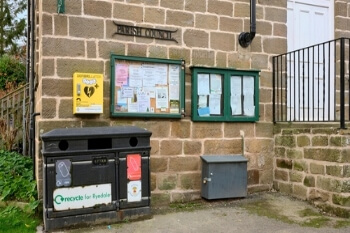
Small Scale, Big Potential: Town and parish councils and devolution
Parish and town councils could play a central role in making devolution work for communities.