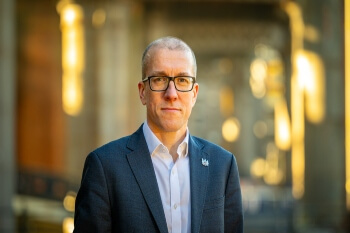
As new powers flow from Westminster to city regions, Jane Burston OBE, Founder and CEO of Clean Air Fund, argues that tackling air pollution is one of the clearest ways for local leaders to prove devolution can transform lives.
For years, local leaders have argued that decisions affecting their communities should be made closer to the people they serve. Within his first month in office, Prime Minister Andy Burnham launched what he has described as ‘the biggest transfer of power from Westminster in a generation’, expanding devolved powers and preparing to give mayors of city regions a share of local income tax revenues for the first time.
With the changes set to be introduced in Spring 2027, one of the clearest opportunities for combined authorities to ensure thriving communities and show how local leadership improves people’s lives lies in an area that affects every resident: the air we breathe.
Public Health England states that air pollution is the UK's biggest environmental threat to public health, contributing to respiratory disease, cardiovascular disease and a range of other health conditions that increase pressure on local services and affect people's ability to participate fully in work, education and community life.
Tackling dirty air is one of the highest return opportunities available to policymakers at all levels of government. Research shows that cleaner air delivered through the UK's planned net zero policies could generate an estimated £7.7bn in productivity gains by 2050 through improved workforce health, reduced illness-related absences and longer working lives.
As combined authorities gain greater influence over transport, planning, infrastructure and economic development, clean air offers a huge opportunity for devolved powers to deliver tangible benefits for local areas.
Recent analysis by UK100 showed that local authority-led improvements to air quality prevented an estimated 13,722 deaths across England between 2019 and 2025 and generated around £15bn in health and economic benefits through lower healthcare costs, reduced pressure on public services and fewer lost working days. Crucially, it found that local action was responsible for around 35% of England's overall improvement in air quality during that period.
For combined authorities deciding how to use new powers and funding, these findings are hard to ignore. Few interventions can simultaneously improve public health, support economic growth, reduce inequalities and strengthen communities in the way clean air can.
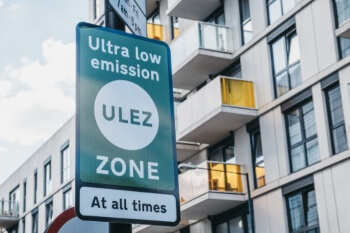
Local government is already demonstrating what works. London's Ultra Low Emission Zone (ULEZ) is perhaps the highest-profile example, with recent research showing that deaths associated with air pollution in London fell by around 40% between 2019 – when ULEZ was first introduced – and 2024. It shows that ambitious action can deliver measurable reductions in pollution and significant public health benefits.
‘School Streets’ are also helping thousands more children to breathe cleaner air. In 2019 there were around 85 in London, growing to 800 by 2025. Following their success in tackling dangerous levels of dirty air around schools during drop-off and pick-up times – with children exposed to up to five times more air pollution on the school run than at any other time – local governments in Liverpool and Greater Manchester announced commitments to set up 50 and 100 School Streets, respectively.
Meanwhile in Oxford, the Zero Emission Zone has reduced traffic and improved air quality in the city centre. Combined with wider transport measures, including the city’s electric bus programme, Oxford reached its local air pollution target earlier this year.
Working in collaboration with residents, schools, businesses, community groups and healthcare providers means local leaders are often best placed to design solutions that reflect local circumstances.
By taking action in their area, local government can also inspire nationwide change. In 2022 Andy Burnham, the then Mayor of Greater Manchester, capped bus fares at £2. Following its local success, the Government followed suit, bringing in a cap across England. One of Burnham’s first announcements when he became Prime Minister was to reinstate the country-wide cap.
For communities facing higher levels of deprivation and poorer health outcomes, a place-based approach is even more important. Analysis by the Institute for Fiscal Studies found that people living in England's most deprived areas experience average PM2.5 exposure levels around 8% higher than those living in the least deprived areas. Given the growing emphasis within the devolution framework on tackling health inequalities and preventing the burden on local health systems, ensuring that everyone can breathe clean air, regardless of their postcode, should be a defining priority for local leaders.
Cleaner air helps councils and combined authorities tackle many of the intersecting challenges they face every day, improving community health, boosting workforce productivity, reducing pressure on public services and making places more attractive to live, work and invest. The Government’s new focus on devolution will give local leaders an even greater opportunity to build on the progress we’re already seeing across the country.
If devolution is to be judged by its ability to improve people's lives, few priorities offer a bigger opportunity than the air that every community breathes.
.png)