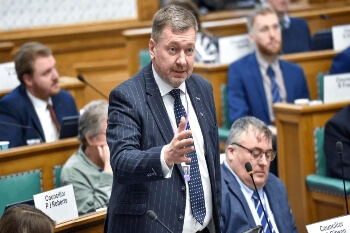
Housing minister Grant Shapps has launched another attack on council chief executives’ pay, after it was reported that some senior staff who recently volunteered salary cuts have partially made up shortfalls through bonus payments and allowances.
Mr Shapps said it was ‘astonishing that it appears chief executives are finding elaborate ways to hike their pay through the back door.’
The newspaper also claimed that some council chiefs had accepted pay rises as they planed to slash local services, while some who had given in to pressure from communities secretary Eric Pickles and volunteered a 5% or 10% pay cut over the past year have topped up their earnings through bonuses and allowances.
 Shapps: ‘astonishing that it appears chief executives are finding elaborate ways to hike their pay’.
According to the Telegraph’s research, 16 of the 25 highest-paid council chiefs were handed pay rises last year. This included the country’s highest-paid chief, Joanna Killan, who jointly manages Essex CC and Brentwood BC.
According to the Telegraph’s figures, Ms Killian received £289,143 last year – an increase of £4,000. Essex CC’s draft accounts for 2010/11 indicate that while Ms Killian’s basic salary decreased by £4,000 that year, she received a £6,900 bonus – more than making up the shortfall.
According to the newspaper’s figures, other chiefs received healthy bonuses last year, while some enjoyed generous-looking expenses and allowances. David McNulty, chief executive of Surrey CC, for example, claimed £12,053 to cover the cost of moving house when he joined the authority.
But the Telegraph’s analysis of council chiefs’ expenses and perks has irked many within local government. The newspaper attacked some expenses payments as excessive, yet senior local government figures pointed out that many of the sums involved are ‘the norm’ for senior staff across the public and private sector.
One senior source said: ‘At a stretch, I can understand some of the concern regarding some of the salaries paid to local authority chief executives. But the debate over senior pay and rewards is getting a little carried away – we now need a mature debate about costs to taxpayers that are acceptable and necessary.’
‘Expenses, and to some extent, bonuses, are a standard part of any senior manager’s working life. These are senior figures who are running organisations with budgets akin to FTSE-listed companies – they travel widely for work that incurs a cost. Bonuses are a standard method of rewarding good performance.’
Despite this, Mr Shapps warned: ‘A culture of bumper pay and perks has no place in local government, especially during these tough times across the public sector.’