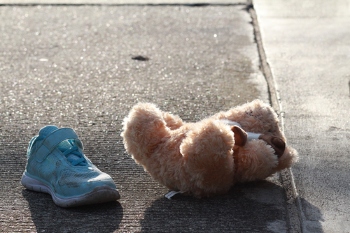
An estimated 222 unaccompanied children are currently missing from the care of the Home Office, new figures have revealed.
Immigration minister Tom Pursglove MP has reported that 222 children were ‘missing’ as of 19 October 2022. Responding to a parliamentary question, he could only provide information about 142 children, who are all between the ages of 15 and 17.
Mr Pursglove confirmed that 39 children have been missing for at least 100 days and four have been missing for between 330 and 339 days.
Seventeen children went missing within a day of the Home Office taking responsibility for them, and 16 went missing after being in the Home Office’s care for seven days or more.
The Children Act 1989 places responsibility for the care and protection of children without parents and carers on local authorities. However, last summer, in response to pressure on the children’s care system, the Government started housing children in hotels along the south east coast.
A Government spokesperson said: ‘We are seeing an unprecedented rise in dangerous Channel crossings. This is putting extreme pressure on our asylum system and has meant we have had no alternative but to temporarily use hotels to give children a roof over their heads whilst long term accommodation is found.
‘On average, unaccompanied children seeking asylum are moved to long term care within 15 days of arriving in a hotel, but we know more needs to be done. That is why we are working closely with local authorities to increase the number of placements available and offer councils £6,000 for every child they can provide accommodation for.
‘Any child going missing is extremely serious, and we work around the clock with the police and local authorities to urgently locate them and ensure they are safe.’
Carolyne Willow, director of the children’s rights charity Article 39, said: ‘This is a catastrophic child protection failure arising directly from a government decision to treat a group of highly vulnerable children differently on the basis of where they were born. There is no provision within the Children Act 1989 which cancels local authority child protection duties when a child was born outside the UK. Child welfare legislation does not discriminate against children on the basis of their race or nationality, but here we have a central government arrangement which does precisely that. This amounts to a form of institutional racism.
‘The risks to children were always substantial, obvious and stark, yet the Home Office with the assent of the Department for Education has wilfully kept children out of the local authority children’s care system, and has failed in its duty of care.’
A spokesperson for the Local Government Association (LGA) said: 'Councils are deeply concerned over the number of children the Home Office is placing in hotels and have expressed concerns to government around the impacts on children, including the risks around children going missing. This is why it is vital the Government urgently acts to develop a planned approach to stopping its use of hotels for lone children.
'Councils take on legal responsibility for a child when they have taken them into their care, and are working tirelessly to find suitable placements for unaccompanied children, including those moving from hotels. 597 placements have been made in the past six months, a sharp increase on the 167 placements made for the same period before.
'At the same time, overall numbers of children in care have increased to over 80,000. This has seen spending to provide support increase by almost a quarter in five years, as councils face pressures to keep up with rising demand to support vulnerable children.
'We also continue to call for urgent conversations with government to address the lack of co-ordination by government across the different schemes for asylum seekers and refugees, including the pressing need for a joined up approach to finding people permanent homes.'