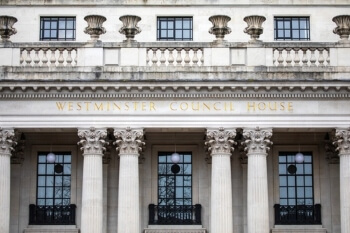
Jonathan Carr-West, chief executive of the Local Government Information Unit (LGIU), reflects on the English Devolution White Paper and considers what councils will be asking for this Christmas.
As we look ahead to the challenges, the changes and the churn that are coming down the track in 2025 there is plenty that local government would like for Christmas.
To pick just two that would be transformative gifts, if they can be delivered on time in the Christmas post: councils would like certainty and stability, and they would like a serious proposal to fix the broken funding system.
We were very pleased to see the English Devolution White Paper published this week, just ahead of Christmas. After so much speculation and rumour it was good to get some clarity and a sense of the direction the Government aims to go in.
Important to remember that devolution is a process not an event. The most important thing is not what’s in the White Paper but how local government responds to it, how the Government seeks to implement it and the conversations that sit around that.
From a local government perspective, the White Paper holds out promise but also creates risk. We need to ensure that the coming months are not just spent in fractious debate about the appropriate size for unitary councils. Our agenda cannot just be about shuffling existing powers and functions around between different-sized units of government. This must be about genuine added value and better outcomes for communities whatever the structures we end up with.
At LGIU we welcome the White Paper’s intent and direction of travel, though we believe it should also include a real commitment to fiscal devolution. And this is next on local government’s wish list. Devolution on its own will not transform public services or fix the financial foundations of local government. We need to see all these agendas as a single piece of thinking and we need to ensure that no one of them holds up the others. There is a system-wide crisis in local government finance that devolution since 2014 has not offered a solution to. Senior council figures have told us that without a finance settlement there will remain significant inefficiencies in the system.
A further roll out of devolution across the country needs a built in, coherent and consistent approach to funding. Drawing on original detailed research of the funding system for local government in Italy, Germany and Japan, LGIU and partners at Northumbria University developed a set of lessons for a future Government to take forward with regard to devolution. They were:
1. Rework the local government needs assessment [the Fair Funding Review]: The Government launched a ‘fair funding review’ in 2016, but this has not progressed since a consultation in 2018. The fair funding review would have reassessed a range of indicators of local need and taken decisions about the relative weighting of those indicators. If this process were completed, it would lay the ground for redistributing funds between local authorities more closely in line with an assessment of need. It was also recommended to simplify the range of indicators used substantially. Among other things, this would help to ensure that funding reflects changes in population and need between authorities since 2013.
2. Establish a systematic form of territorial equalisation between local authorities: England is an international outlier in not having a systematic form of territorial equalisation, that ensures solidarity and parity in needs-based revenue between location. Germany, Italy, and Japan all have forms of redistributions of major income streams to ensure that all locations have access to resources. This would help to reduce the risk of increased Section 114 notices. It would also recognise that not all areas have access to buoyant local income streams and would open the door to wider participation in devolution and some form of local decision-making and accountability.
3. Develop a long-term programme exploring assigning national tax revenues to local authorities: It would be a pro-active vehicle for consultation on Government proposals, raising of emerging issues, negotiation of financial agreements and mediation of conflict. This would form an essential pillar of a more developed settlement, or concordat between local and national government. Germany, Italy, and Japan all have comparable institutions that are well-resourced, embedded, and respected. Such institutions practise intergovernmental coordination and strengthen relationships between the tiers.
Local government will be essential to delivering many of the aims that the government in Westminster has set out, but fundamental issues will need to be addressed to enable that. Questions of structure and specific powers in specific places are important, of course. But many of the issues we highlight here relate to the culture of governance in Whitehall, longstanding financial challenges, and issues that permeate democratic politics in the UK and around the world.
It is important that we take stock of the strengths and weaknesses of the devolution programme so far. UK policy-makers do not have a strong track record in learning from previous iterations of policy. If we can hold on to some key principles and lessons learned from the past 10 years during the upcoming debate, and during the period of change that may follow, local government might have an optimistic future to look ahead to.