
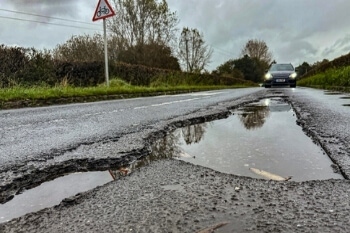
A new traffic light rating system has been rolled out to assess how effectively local highway authorities (LHAs) are fixing potholes and maintaining roads.
The red, amber, and green rating map developed by the Government is designed to ‘highlight best practice and drive improved performance from councils’ in their pothole repair and road maintenance efforts.
According to the Department for Transport (DfT), the system considers three main areas: local road conditions, the amount spent by LHAs on road repairs, and the extent to which LHAs are using best practice.
Following the Government’s £7.3bn investment in fixing potholes and boosting local road maintenance at the Budget, the ratings will determine whether LHAs are using the funding efficiently to deliver preventative, long-term solutions to road improvement.
The 16 regions with green scores include areas such as Sandwell, Manchester, and Leeds, while areas such as North Yorkshire and Swindon were two of the 125 LHAs that scored amber.
Thirteen areas were rated red, including, Suffolk, Cumberland, and Derbyshire, rendering them eligible for a dedicated support programme that includes access to expert planning worth £300,000 to help LHAs apply best practice.
The Government has also committed to another year-long extension of the Live Labs 2 programme, as well as confirming that future funding allocations will be based on performance, motivating councils to ‘get on with the job and use taxpayer money efficiently’.
Transport Secretary Heidi Alexander said: ‘For too long drivers have paid the price because our roads were left to deteriorate’.
She added: ‘This Government’s record investment will save drivers money on repairs, make roads safer and help restore pride in our communities.’
Edmund King, AA president and founding member of the Pothole Partnership, said: ‘We welcome this Government initiative to hold local highways authorities to account which should help to promote the Pothole Partnership objective of more proactive and permanent repairs.’
RAC Head of Policy, Simon Williams, added: ‘While there are examples of good road maintenance practice taking place, this isn’t consistent across the country and means drivers have for too long been left with substandard roads.
‘We hope this initiative, plus the promise of longer-term funding for councils to allow them to plan and carry out much-needed preventative maintenance, means we’re finally on the way to having smoother, better roads.’
Angela Jones, President of ADEPT said: ‘We acknowledge the Government's commitment to transparency and long-term investment in local roads, however the newly published ratings raise significant questions about the assessment methodology.
‘We would like clarity on how ratings have been calculated, including how different data collection approaches and funding allocation timings have been factored into assessments.
‘We need to ensure the ratings fairly reflect genuine progress across different local authority areas - in the future, we believe local authorities should have the opportunity to verify data and clarify any factual questions before ratings are published, to ensure accuracy and build confidence in the system.’
For more on this topic, download your free copy of How to Fix Local Roads: Sustainable Road Maintenance Solutions for Local Government.
.png)