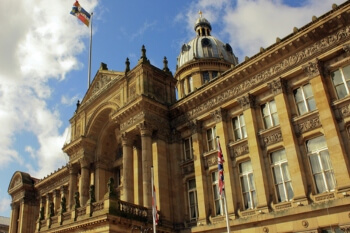
Birmingham is taking the threat of climate change seriously, and introducing a series of measures aimed at curbing the city’s carbon emissions, explains Neville Summerfield
The consequences of climate change – witness last summer’s record-breaking rainfall and the chilliest start to a new year for years – now look certain to become top priorities for local government in coming decades.
Birmingham was a cornerstone of the industrial revolution – which many believe triggered the start of changing weather patterns – and we now want to be at the forefront of any battle to safeguard the planet.
In our ‘people’s poll’ in October 2007, 63% of local respondents felt climate change – alongside terrorism – was their ‘key global concern’. And that places a moral and political responsibility on us to act.
While, at the highest levels, the Government has demonstrated a commitment to tackling climate change, this has not yet penetrated the perma frost of existing regulatory and evaluation frameworks evident at every level in the Civil Service.
It is important, therefore, for the Government to consult with us on the best way to support our climate change activities so the public sector can act together to maximise our efforts.
What we need, in particular, is certainty on appraisal systems for funding climate change projects, and proof that carbon reduction is seen as a real priority in supporting investment decisions.
Climate change is a global issue and one which needs local government and citizens to act together to make a real difference.
We have deliberately prepared our climate change response at a city-wide level through our local strategic partnership – BeBirmingham – and used innovative educational events to help the public understand how they can contribute to carbon reduction and more efficient energy use.
We are also the only UK council to take part in the ‘Clinton initiative’ on international climate change.
Our vision and commitment is ‘to reduce the city’s carbon emissions by 60% by 2026’. This is a major element of the environment workstream which forms part of the innovative and challenging council-wide corporate transformation programme we have put in place.
The workstream will look at sustainable transport, procurement, waste and resource management, sustainable urban drainage, flood and heat-risk management, energy efficiency and renewable energy, climate change and sustainable urban neighbourhoods.
So how do we make this a reality? Here are some examples:
l we have concluded three-year targets through the local area agreement (LAA), and we now have two key LAA delivery plans for low carbon (NI 186 – CO2 reduction) and Climate ready (NI 188 – climate change adaptation) in place to deliver carbon-reduction targets of 100,000 tonnes of CO2 in 2008/9, and to ensure Birmingham is more climate ready for the extreme weather events we can expect in coming years
l we have a six-month Carbon management programme being prepared with the Carbon Trust to reduce emissions across our business travel, our local authority buildings (around 1,400 different types), our vehicle fleet (at least 1,800 vehicles), and by utilising investment in new accommodation to significantly reduce our emissions through our Building Schools for the Future programme and our Business Transformation Working for the future accommodation programme. We have established a carbon management team and an internal project board to oversee this
l we have put in place clear guidance in the specification of carbon reductions in our Building Schools for the Future programme – aimed at a 60% reduction – and are now using LED lights in all new/replacement traffic lights, as well as actively assessing the feasibility of a complete replacement programme for all 26,000 lights in the city
l we are actively engaged in discussion with CENEX (the Low Carbon Vehicles Partnership Centre of Excellence) to identify pilot low carbon/electric vehicles in the delivery of public services, and we will have completed a new, sustainable housing development at Warstock by early 2009
l we have installed a number of solar thermal and solar electric installations in Birmingham schools to reduce energy bills, and educate our future citizens and their families on the responsibility to use renewable energies
l we will be investing in new energy networks, in the city centre initially, and be rolling out an energy partnership approach to improve energy efficiency in the existing housing stock through new approaches using IT and digital technology.
These are good steps in the right direction, and we will continue with our commitment to adapt our services and our city to the demands of today and tomorrow.
We will look to work with other councils, public sector organisations and private partners to learn, share experience and develop a wider approach to managing climate change.
National policy, though, must still provide more practical assistance and, most importantly, help us work together to make change happen, whether at regional, national or European level.
Where we work together the benefits will be far greater for all of us. w
Cllr Neville Summerfield is cabinet member for regeneration at Birmingham City Council
Birmingham was a cornerstone of the industrial revolution – which many believe triggered the start of changing weather patterns – and we now want to be at the forefront of any battle to safeguard the planet.
In our ‘people’s poll’ in October 2007, 63% of local respondents felt climate change – alongside terrorism – was their ‘key global concern’. And that places a moral and political responsibility on us to act.
While, at the highest levels, the Government has demonstrated a commitment to tackling climate change, this has not yet penetrated the perma frost of existing regulatory and evaluation frameworks evident at every level in the Civil Service.
It is important, therefore, for the Government to consult with us on the best way to support our climate change activities so the public sector can act together to maximise our efforts.
What we need, in particular, is certainty on appraisal systems for funding climate change projects, and proof that carbon reduction is seen as a real priority in supporting investment decisions.
Climate change is a global issue and one which needs local government and citizens to act together to make a real difference.
We have deliberately prepared our climate change response at a city-wide level through our local strategic partnership – BeBirmingham – and used innovative educational events to help the public understand how they can contribute to carbon reduction and more efficient energy use.
We are also the only UK council to take part in the ‘Clinton initiative’ on international climate change.
Our vision and commitment is ‘to reduce the city’s carbon emissions by 60% by 2026’. This is a major element of the environment workstream which forms part of the innovative and challenging council-wide corporate transformation programme we have put in place.
The workstream will look at sustainable transport, procurement, waste and resource management, sustainable urban drainage, flood and heat-risk management, energy efficiency and renewable energy, climate change and sustainable urban neighbourhoods.
So how do we make this a reality? Here are some examples:
l we have concluded three-year targets through the local area agreement (LAA), and we now have two key LAA delivery plans for low carbon (NI 186 – CO2 reduction) and Climate ready (NI 188 – climate change adaptation) in place to deliver carbon-reduction targets of 100,000 tonnes of CO2 in 2008/9, and to ensure Birmingham is more climate ready for the extreme weather events we can expect in coming years
l we have a six-month Carbon management programme being prepared with the Carbon Trust to reduce emissions across our business travel, our local authority buildings (around 1,400 different types), our vehicle fleet (at least 1,800 vehicles), and by utilising investment in new accommodation to significantly reduce our emissions through our Building Schools for the Future programme and our Business Transformation Working for the future accommodation programme. We have established a carbon management team and an internal project board to oversee this
l we have put in place clear guidance in the specification of carbon reductions in our Building Schools for the Future programme – aimed at a 60% reduction – and are now using LED lights in all new/replacement traffic lights, as well as actively assessing the feasibility of a complete replacement programme for all 26,000 lights in the city
l we are actively engaged in discussion with CENEX (the Low Carbon Vehicles Partnership Centre of Excellence) to identify pilot low carbon/electric vehicles in the delivery of public services, and we will have completed a new, sustainable housing development at Warstock by early 2009
l we have installed a number of solar thermal and solar electric installations in Birmingham schools to reduce energy bills, and educate our future citizens and their families on the responsibility to use renewable energies
l we will be investing in new energy networks, in the city centre initially, and be rolling out an energy partnership approach to improve energy efficiency in the existing housing stock through new approaches using IT and digital technology.
These are good steps in the right direction, and we will continue with our commitment to adapt our services and our city to the demands of today and tomorrow.
We will look to work with other councils, public sector organisations and private partners to learn, share experience and develop a wider approach to managing climate change.
National policy, though, must still provide more practical assistance and, most importantly, help us work together to make change happen, whether at regional, national or European level.
Where we work together the benefits will be far greater for all of us. w
Cllr Neville Summerfield is cabinet member for regeneration at Birmingham City Council