A Working Group has been formed to start local engagement on whether Copeland could be a suitable location for a Geological Disposal Facility (GDF) for higher activity radioactive waste.
The group, which will include Copeland Borough Council and Radioactive Waste Management (RWM), will engage with people in Copeland to canvass their views. Other groups could be invited to join, including representatives from the Cumbria Association of Local Councils (CALC).
The geographical area to be discussed will initially cover the whole of Copeland borough, but would exclude the Lake District National Park at the request of Copeland Borough Council and the interested parties. The potential for underground facilities off the coast, accessed from land, will also be considered.
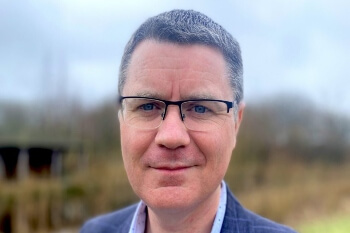
‘Today marks the first step in a journey of several years, to determine whether a Geological Disposal Facility is right for Copeland,’ said Mark Cullinan, the independent chair of the Copeland GDF Working Group.
‘The infrastructure investment potential represented by such a facility could be transformational for the eventual host community – both directly through the construction and operation of the GDF and also potentially significant multi-million pounds of additional investment – but, of course, it would have to be right for the area.
‘I’m delighted to be joining the Copeland GDF Working Group as its independent chair, as we begin to talk to local people to understand the issues and opportunities and listen to their views.’
Cllr David Moore, Copeland Borough Council’s portfolio holder for nuclear services, commented: ‘Copeland Council’s participation in the Working Group means that the council, on behalf of our whole community, will play a key role in the process to establish whether there is a suitable location and willing host community for a GDF in Copeland.
‘Regardless of a final location for a GDF, the Copeland community is affected fundamentally as the vast majority of materials that would go for disposal are located here, and the Sellafield site will be at the front end of the operational phase for decades to come.
‘The fact that there are interested parties within the borough and now on the Working Group means that the time is right for Copeland – as a borough – to enter into the dialogue too. We set out our stall that the Lake District National Park should be excluded from any consideration, and I am pleased that this exclusion is fully established in the Working Group’s scope from the outset.’
Cllr Moore emphasised the importance of only going ahead with a GDF if it was backed by the residents of Copeland.
‘If there is a potentially suitable location and the process is taken forward, it would absolutely require the community’s support before any decisions were made,’ he said.
The MP for Copeland, Trudy Harrison, added: ‘Most of the material that would go into the GDF is already based here in Sellafield. A permanent place to deposit this material in Copeland would not only build on our heritage as the country’s nuclear experts, but it would also lay the ground for significant future investment in the region.
‘A GDF will be one of the biggest environmental protection projects of our lifetime. It will also be one of the largest planned infrastructure investments over the next 100 years, and the opportunity to host it here is one that we simply have to look at.
‘We need to look at a GDF in parallel with research and development into the future of nuclear materials at Sellafield and future nuclear power generation for West Cumbria, including new reactor technologies.’