William Eichler 22 January 2019

Consumer watchdog reveals broadband ‘black spots’

Many local authority areas, including in London, still have broadband black spots, according to a consumer watchdog.

Research from Which? has revealed that while rural Scotland and Wales have Britain’s slowest average connection speeds, many urban areas still have ‘sluggish’ broadband.

The Orkney islands (3Mbps), Allerdale (5.7Mbps), Shetland Islands (6.7Mbps), Argyll and Bute (7Mbps), Moray (7.1Mbps), Fermanagh and Omagh (7.4Mbps) and Ceredigion (7.5 Mbps) were the worst affected local authority areas.

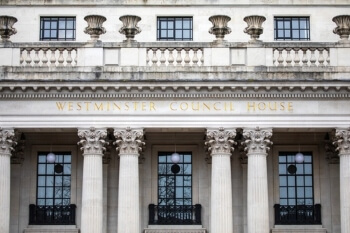
Tower Hamlets (10.1Mbps), Westminster (10.8Mbps), Stroud (11.4Mbps), Tunbridge Wells (11.4Mbps), North East Derbyshire (11.5Mbps), and Canterbury (11.5Mbps) were also found to be lagging well behind other areas.

The fastest local authority area for broadband speeds was commuter borough Broxbourne with an average 32.5Mbps.

Other urban areas benefiting from fast internet include Crawley (32.3Mbps), West Dunbartonshire in Scotland (29.6Mbps), Watford (29.5Mbps), Rushmore (28.9 Mbps), Nottingham (27.6Mbps) and Cambridge (27.3Mbps).

The fastest broadband in London was found in the borough of Harrow (26Mbps) followed by Barking and Dagenham (25.7Mbps) and Greenwich (23.6Mbps).

‘Having a good broadband connection is a basic requirement for many important everyday tasks, so it is unacceptable that millions of people around the country are still struggling to get what they need,’ said Alex Neill, Which? managing director of home products and services.

‘The Government and the regulator must now press ahead with plans to provide a bare minimum connection speed of 10 Megabits in every household and make sure that no one is at a disadvantage because of where they live.’


Skills Pipelines: What local government needs to know image

Skills Pipelines: What local government needs to know

Councils and mayors are to be handed a central role in developing skills pipelines for local industries, as the Government unveils what it calls a ‘fundamental change’ to the education system aimed at tackling youth unemployment. Here's what council leaders and officers need to know.
SIGN UP
For your free daily news bulletin
Highways jobs

Residential Support Workers - Development Programme

Durham County Council
£26,403 - £28,598 per annum. Pay award pending.
Residential Support Workers – Temporary 12 Month development opportunity Salary
Recuriter: Durham County Council

Team Leaders

Durham County Council
Grade 8 £32,597 - £36,363 (pay award pending)
Team Leaders – Opportunities are available across the County Durham Area   Salary
Recuriter: Durham County Council

Residential Workers

Durham County Council
Grade 7 £30,024 - £33,699. Pay award pending.
Residential Workers - Opportunities are available across the County Durham Area Salary
Recuriter: Durham County Council

Service Design Lead

Durham County Council
£40,777 to £45,091 p.a. (Grade 11) Pay award pending
We are looking for an experienced and confident Service Design Lead to play a key role in shaping the future of customer services within Durham County Durham
Recuriter: Durham County Council

2 x Health Care and Education Assistants

Durham County Council
£24,796- £25,185 (Pro Rata)
Temporary Contract until August 2027, with the potential to extend, subject to funding. Part Time- 34 hours per week (8.40am to 4pm Mon-Fri) Term Time Spennymoor
Recuriter: Durham County Council
Linkedin Banner