A report into social mobility published today ‘debunks’ the assumption that a simple north-south divide exists and argues your chances of success are closely bound up with where you live.
The Social Mobility Commission’s State of the Nation report argues ‘a stark social mobility postcode lottery exists in Britain today’ and the chances of someone from a disadvantaged background succeeding are tied to where they live.
The report acknowledges there is a ‘striking geographical’ divide between London and the rest of the country. It also notes estimates suggest the North is £6bn a year underfunded compared to the capital.
However, it stresses that socio-economic inequality cannot be understood as ‘a simple north-south divide’. Instead, the report discovered there were ‘hotspots’ and ‘coldspots’ found in almost every part of the country.
The Social Mobility Commission, an advisory non-departmental public body, ranked all 324 local authorities in England in terms of their social mobility prospects for someone from a disadvantaged background using a range of 16 indicators for every major life stage, from early years through to working lives.
The results revealed that London dominates the hotspots — areas with high levels of social mobility — whereas the East and West Midlands are the worst performing regions.
London accounts for nearly two-thirds of hotspots, according to the index. Half of the local authority areas in the East Midlands and more than a third in the West Midlands are social mobility coldspots.
Apart from London, English cities are underperforming on social mobility outcomes. No other city makes it into the top 20%
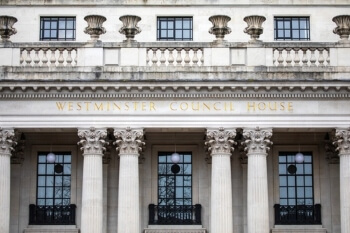
The best performing local authority area is Westminster and the worst performing area is West Somerset.
The commission’s research also found that inner cities are no longer the worst performing areas when it comes to social mobility. Remote rural and coastal places, and former industrial areas, especially in the Midlands, now have lower levels of social mobility.
Young people in these areas, in particular, face ‘far higher barriers than young people growing up in cities and their surrounding areas’, the report says. They face lower rates of pay in their working lives and fewer top jobs.
The report also states there is no direct correlation between the affluence of an area and its ability to sustain high levels of social mobility.
Deprived areas such as Tower Hamlets, Hackney and Newham are social mobility hotspots, according to the index. While wealthier areas like West Berkshire, Cotswold and Crawley are coldspots.
‘The country seems to be in the grip of a self-reinforcing spiral of ever-growing division. That takes a spatial form, not just a social one. There is a stark social mobility lottery in Britain today,’ said commission chair Alan Milburn.
‘London and its hinterland are increasingly looking like a different country from the rest of Britain. It is moving ahead as are many of our country’s great cities.
‘But too many rural and coastal areas and the towns of Britain’s old industrial heartlands are being left behind economically and hollowed out socially.
‘Tinkering around the edges will not do the trick. The analysis in this report substantiates the sense of political alienation and social resentment that so many parts of Britain feel.
Image: dietrich herlan erich / Shutterstock.com.