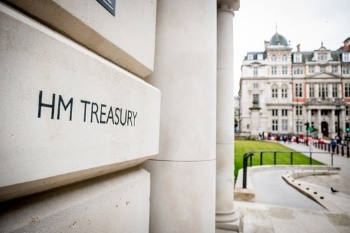
The Treasury has announced reforms to guidance that provides a framework for how public sector organisations should appraise, develop and evaluate policies, programmes and projects.
Under existing Green Book rules, Treasury decision-makers often focused heavily on narrow cost-benefit analysis – mainly prioritising maximum economic return per pound.
Spending Review documents said the Government would implement a ‘new approach' by reforming the Green Book and how it will be used to provide ‘objective, transparent advice on public investment across the country'.
The Treasury said it would introduce ‘place-based business cases', bringing together the projects needed to achieve the objectives of a particular place.
It promised to ‘simplify and shorten' the Green Book and the accompanying business case guides, with an updated document to be published at the start of next year.
The documents promised to ban the use of ‘arbitrary benefit-cost ratio thresholds as a simple means of determining if a project should be funded' and ‘improve the Green Book guidance on transformational change to help public servants better assess the potential of projects to bring about growth'.
Chancellor Rachel Reeves said: ‘Our new Green Book will support place-based business cases and make sure no region has Treasury guidance wielded against them.'
The changes, which had been called for by Greater Manchester mayor Andy Burnham and Liverpool city region mayor Steve Rotheram, are expected to shift public spending decisions away from London.
Chief executive of think-tank Localis, Jonathan Werran, said: ‘The revised Green Book will favour investment in particular parts of the country rather than where it is easiest to secure return on investment and is potentially bad news for place leaders in London and the greater South East.'