It’s time to rebuild some civic pride
Local government buildings were once beacons of civic pride. They were physical demonstrations of community leadership, a sense of place, and impressive gathering points for local communities.
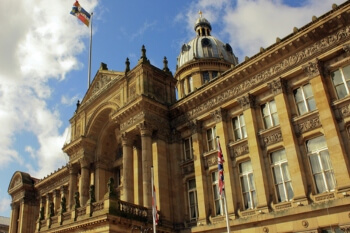
Many of them still exist today, of course – the listing process has seen to that. The Victorian town halls are still focal points in Manchester, Birmingham and Bradford. Leeds has both a town and civic hall, and Bolton has arguable the most impressive of the lot.
County Hall in London is a landmark, magnificently outliving its original purpose. County Hall in Northallerton, where I worked for 10 happy years, is a marvel of Edwardian design and over-statement.
As a rule, post-Second World War civic buildings have been more functional and understated. There are exceptions, of course – City Hall in London has its admirers and detractors in equal measure – but modern building methods and materials age less well. In my view, they are not the beacons of excellence they once were.
All this came home to me on a recent trip to the Danish capital, Copenhagen, a city I was visiting for the first time. Delegates from local authority organisations from across Europe met at both the local government building and the centre for regional associations.
The local government building is six years old. It dominates its district and is a ‘concept’ building – utterly designed for purpose.
Work areas surround an enormous atrium, designed as a gathering space for people from local councils. Staff work areas are shared and designed for a range of specific purposes, way beyond our open-plan. The whole is a testament to energy, efficiency and sustainability.
At the other end of the city, the centre for regional associations is a tastefully converted maritime building in the rejuvenated docks. The sense of pride from the staff exactly matches its local government counterparts.
The English obsession with efficiency and cost consciousness could argue whether two buildings on this scale are necessary. However, our Danish hosts never talked about ‘offices’. They introduced them as ‘houses’ – and that’s what they felt like.
Denmark is a country of five-and-a-half million people, more than two million of whom live in Copenhagen anyway. These buildings matched anything we achieved in civic pride in the heyday of local government. They are a real demonstration of how national, regional and local government exist in harmony and mutual respect.
Many of them still exist today, of course – the listing process has seen to that. The Victorian town halls are still focal points in Manchester, Birmingham and Bradford. Leeds has both a town and civic hall, and Bolton has arguable the most impressive of the lot.
County Hall in London is a landmark, magnificently outliving its original purpose. County Hall in Northallerton, where I worked for 10 happy years, is a marvel of Edwardian design and over-statement.
As a rule, post-Second World War civic buildings have been more functional and understated. There are exceptions, of course – City Hall in London has its admirers and detractors in equal measure – but modern building methods and materials age less well. In my view, they are not the beacons of excellence they once were.
All this came home to me on a recent trip to the Danish capital, Copenhagen, a city I was visiting for the first time. Delegates from local authority organisations from across Europe met at both the local government building and the centre for regional associations.
The local government building is six years old. It dominates its district and is a ‘concept’ building – utterly designed for purpose.
Work areas surround an enormous atrium, designed as a gathering space for people from local councils. Staff work areas are shared and designed for a range of specific purposes, way beyond our open-plan. The whole is a testament to energy, efficiency and sustainability.
At the other end of the city, the centre for regional associations is a tastefully converted maritime building in the rejuvenated docks. The sense of pride from the staff exactly matches its local government counterparts.
The English obsession with efficiency and cost consciousness could argue whether two buildings on this scale are necessary. However, our Danish hosts never talked about ‘offices’. They introduced them as ‘houses’ – and that’s what they felt like.
Denmark is a country of five-and-a-half million people, more than two million of whom live in Copenhagen anyway. These buildings matched anything we achieved in civic pride in the heyday of local government. They are a real demonstration of how national, regional and local government exist in harmony and mutual respect.