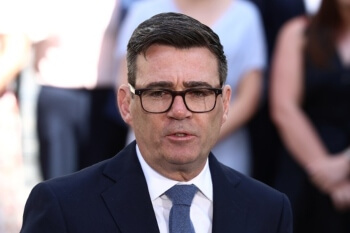
English mayors are to receive a share of income tax revenues and business rates as part of ‘a new era of devolution’, Prime Minister Andy Burnham has announced.
In what the Government is billing as the ‘biggest transfer of power from Westminster in a generation’, mayors will begin retaining a greater share of locally generated income tax from April 2028 and business rates from next spring, starting with business rates, with full details due at the Budget.
‘I said we’d take power out of Westminster and carry it into every postcode in the country. Today, we make good on that promise,’ the PM said.
‘Under our plans, more of the taxes raised in a community will stay in that community. Soon, every local leader will have the power and resources to improve public transport, build homes and create jobs.’
Chancellor John Healey said local leaders understand best what their areas need, while Housing Secretary Angela Rayner described the reforms as ending the ‘begging-bowl culture’ between regions and Whitehall.
Areas without a mayor will be supported to establish new strategic authorities, a Government statement said.
The changes will also hand mayors greater control over rail and bus services, planning, regeneration, and 16-19 education funding.
A new ‘local first’ principle will require ministers to justify keeping powers in Westminster rather than devolving them, with the Civil Service expected to shrink as responsibilities shift to regional leaders.
Local government response
Cllr Eamonn O’Brien, chair of the Local Government Association welcomed the move but cautioned that it must be accompanied by ensuring devolution is extended to those areas that are currently without a mayor or strategic authority.
‘A rebalancing of power must include completing the devolution map so that every community can benefit from meaningful devolution, avoiding a long tail of areas left without the same level of devolved powers, resources or influence,’ he said.
‘There is a risk that areas currently without mayors or strategic authorities will not benefit from this announcement and it is important Government provides clarity on how distribution will be equitable regardless of geography or governance structures.’
David Phillips, head of Devolved and Local Government Finance at the Institute for Fiscal Studies (IFS), said the plans, while not radical by international standards, are significant for England, where mayoral authorities outside London currently rely heavily on Government grants.
'By 2028, much more of their funding will come from tax revenues raised in their areas. This will provide greater financial reward if their economies and revenues perform strongly, but also more risk if the economy and revenues perform poorly – perhaps due to factors entirely outside of their control,' he said.
'With the new PM Andy Burnham placing a priority not just on growth but also on tackling regional inequalities, designing an appropriate system of "equalisation" will be vital. Trade-offs between providing rewards for growth and protection from the risk of things going wrong cannot be avoided entirely.'
Further reading:
- Andy Burnham, make devolution mean devolution!
- Local Government Reorganisation: What It Means and Why It Matters
- Devolution and putting place first
- Fiscal Devolution – has stuff just got real?
- Local Government Reorganisation: What councils must get right.