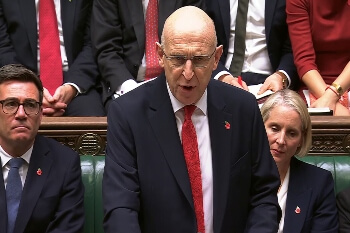
Chancellor John Healey has launched his first Budget, promising to ease pressure on families and businesses, a roadmap to fiscal devolution and a raft of new mayoral authorities.
In addition to a share local income tax and tourism taxes for mayoral authorities, the Chancellor vowed to give ‘local and regional government…100% of business rates income before the end of the decade in place of grants from central government'.
Local government business rate share is set to increase to ‘at least 70%' with mayoral authorities retaining 20%.
By the next spending review, Healey vowed to have a digital overhaul of the government, including a review of NHS productivity and AI, to ringfence prevention spending and to streamline the state through devolution including ‘reducing the double running between central and local government'.
This includes plans to cut Whitehall roles and functions that will no longer be needed due to devolution.
Healey raised the statutory lending limit for the Public Works Loan Board from £135bn to £155bn, with an option to increase to £175bn.
The small print of the Budget documents revealed ten new devolution agreements were in the final stages including a mayor for Kent and Medway ‘only if its reorgansiation outcome allows'.
On housing, an extra £1.5bn has been ploughed into building new homes, ‘espcially council homes', allocated from 2027-28 and rising over time to allow capacity building.
A further £432m has been set aside to tackle rough sleeping, while the chancellor promised not additional building regulations.
Much of Healey's speech centred around attempts to ease the cost of living pressures, cutting fuel bills and offering a £100 energy bonus to houses in council tax bands A-D.
There were no notable measures to ease pressures of SEND, while Healey highlighted plans for a National Care Service to come there were no measure to fund social care in the interim.
But the chancellor did raise minimum wage levels and offer cash for an apprenticeship scheme for mayors.