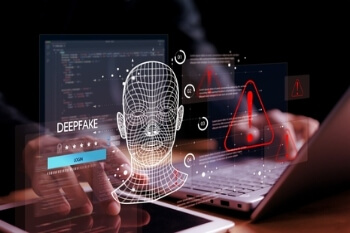
A survey has found that 30% of voters saw a deepfake or AI-generated video, audio, clip or image about an election candidate or politician online in the run up to this May’s local council elections.
The polling of more than 2,000 voters in the month before the local elections has been revealed by think tank Demos.
It said the findings show that ‘deepfakes are no longer a future threat to our democracy, they are already flooding people’s social media feeds’.
Voters also gave their views on chatbots and AI services, including, ChatGPT, Google Gemini, Google AI Overviews, Grok and Replika.
One in five used an AI service to find out information about council elections in England and for the devolved regions.
But almost half are worried that AI chatbots are sharing inaccurate information. A similar proportion say they do not trust AI tools for election related information.
Demos found widespread inaccuracies and unreliable information produced by chatbots and other AI services during elections.
Researchers tested AI tools during a single day in the run up to the 2026 Scottish Government election and found that more than one third of responses contained factual errors and that reliability ‘varied significantly across services’.
Errors included the wrong date of the election and inaccurate advice around voter ID stipulations.
More than half of responses from Replika and almost half from ChatGPT contained errors.
ChatGPT gave the date of the election wrong by over two months, meanwhile Replika invented an accusation of nepotism against a candidate.
Also, the stance of a candidate on the Scottish Assisted Dying Bill was wrongly given by Gemini.
Replika was found to have been ‘hallucinating’ a candidate in one of its responses and on another occasion an imaginary expenses scandal was given.
Demos added: ‘Polarisation, declining trust, online misinformation, and rapidly developing technologies such as AI deepfakes are putting new pressures on the system.
‘The UK must take urgent steps to safeguard its election integrity ahead of the 2029 general election.’